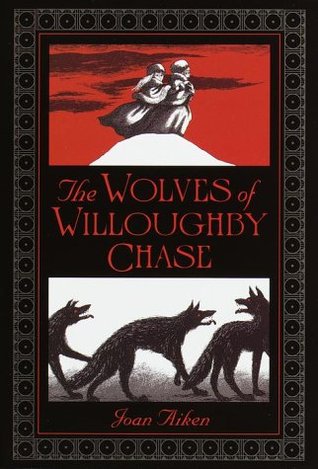
The Wolves of Willoughby Chase by Joan Aiken has been my favorite novel of the year (so far). I was able to borrow the audio version through my library and stream it through our van’s Bluetooth feature on our vacation several weeks ago. The book is read by Lizza Aiken, Joan Aiken’s daughter. In the introduction, she shares how her mother came to write the story and the adventure that the manuscript itself had before finally being published in 1962.

There are wolves that roam the moors in England. They travel in packs and threaten all who travel by train or carriage. And there are even wolves at Willoughby Chase! This is a moving story about two orphans, Bonnie and Sylvia, who are mistreated by their evil governess, Miss Slighcarp. The orphans bravely face many discouraging situations, but their pluck and resourcefulness aid them through one obstacle after another. They are also helped along by a faithful nanny, Patton, and a loyal friend named Simon, and of course, Providence. The girls survive and even thrive through heartache and disappointment. I enjoyed the plot twists and turns.

We enjoyed listening to this as a family while we traveled on our own adventure. I highly recommend it as a family read aloud or just for personal enjoyment. It’s appropriate for ages 9 – 99, so why not give it a try? It is well deserving of its “classic” status.

This week’s term: Free Moral Agency – Funk & Wagnall’s: “The power or capacity to act freely, i.e., without the constraint of the will.” Webster’s New International Dictionary: “Not determined by anything beyond its own nature or being; not necessitated by an external cause or agency; choosing or capable of choosing for itself as a free agent.” (Thomas Paul Simmons Systematic Theology, 181)

Last week’s term: Free Will – Webster’s definitions: “1. Freedom of decision, or of choice between alternatives. 2. The freedom of the will to choose a course of action without external coercion, but in accordance with the ideals or moral outlook of the individual.” Rightly understood, these are both Bible and Baptist doctrines and can be held affirmatively. However, the common Arminian argument for this term today is that in the fall, man’s will was somehow insulated, so that he may make choices without regard to, or restraint from, his fallen nature. This is absolute heresy.

We made it into D.C. on Monday, March 6, for our first full day of exploring. Today I am sharing about a place that is important to every single American, the Bureau of Engraving and Printing, where they make money…literally.

To visit this interesting locale, you must have a scheduled tour, no “walk -ins”. To plan your visit, contact your U.S. Representative’s or Senator’s office. You must have your photo I.D., along with your confirmation number, and like in every single place in D.C., you must be prepared to be searched. This includes x-ray machines for bags (or they will hand search your purse or bag), belts off, pockets emptied, arms out, and security guards examining your pupils for dilation. Okay, I exaggerate, but only slightly.

Our tour was the first one of the day. We arrived in plenty of time, too much time, actually. It was freezing cold. We parked near the Jefferson Memorial because it was free (and empty), but that meant we had a 1.5-mile trek to the Bureau of Engraving and Printing. After waiting for 40 minutes in the wind, we were ready to hug the neck of the man who opened the door for us. The warm air was so inviting, that I didn’t even mind being searched…until they said, “Wait a minute, we’re not ready yet, go back outside.” The sheer heartbreak of it all! I hate to even recall it!

Leslie, waving to commuters to keep warm while we waited outside.

We finally got in, for real, and got searched. Right before entering, Mitchell realized he had his pocket knife with him. This is a major no-no in our nation’s capital. Washington D.C. has the least freedom in the “land of the free”. Terry stashed it outside and hoped to be able to retrieve it when we left. There’s always a little excitement when you travel with the Bashams!

We spent a few glorious minutes getting warm in a long hallway. It had various displays about the history of our currency. I didn’t realize it at the time, but this would the highlight of the tour.

The tour lasted about thirty minutes. One word comes to mind: underwhelming. We walked along corridors that had windows looking down into the area where bills were printed. A very attractive lady with a distinct speaking manner talked into a microphone, sharing information as we made our way through. She pointed out the unique security features in our money, most of which we already knew about. The tour ended at the machine where all the finished money is supposed to be spinning around a carousel and being wrapped, but we saw a whopping nothing. That part of the factory was down for an equipment upgrade. TV screens were playing footage of what normally happens in that area, but our TV was blank. Bummer.

We were told up front that no photography or videography was allowed. I was able to get a few photos outside and in the gift shop.

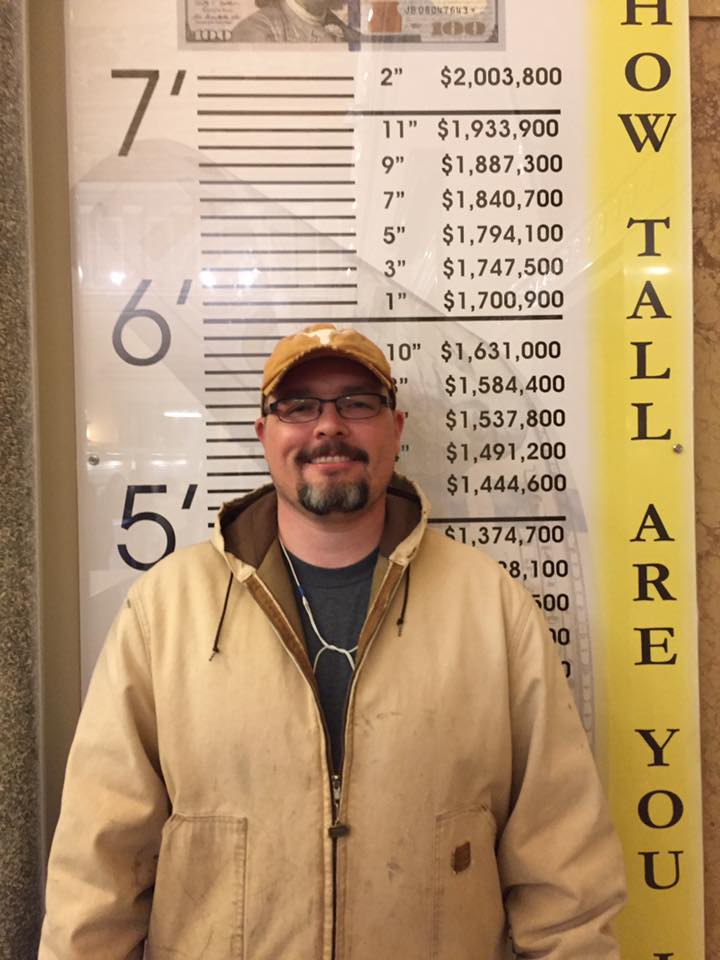
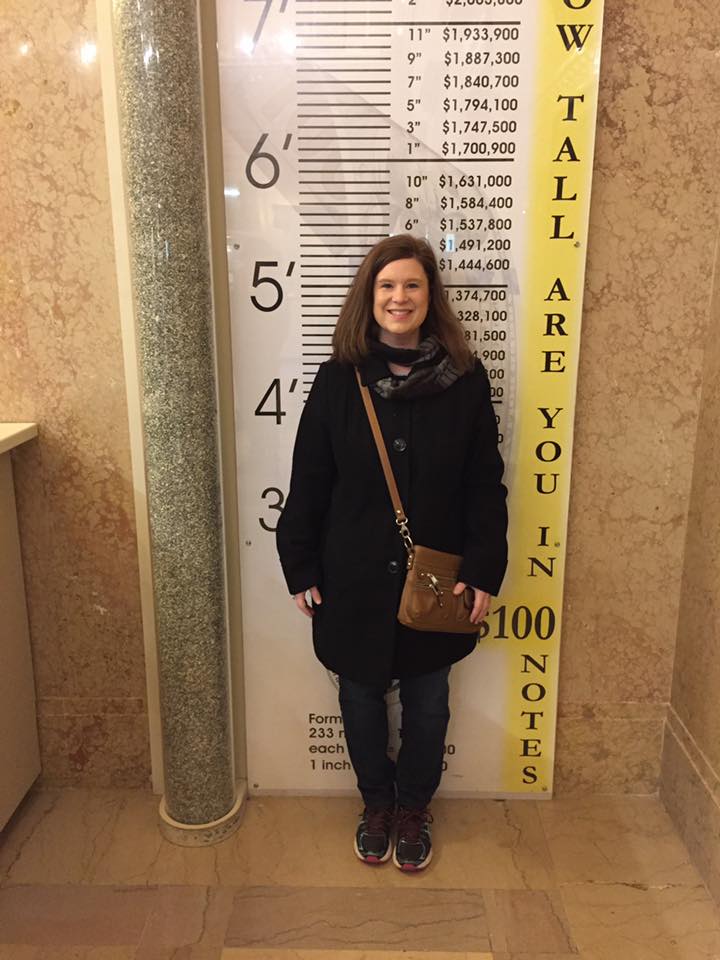
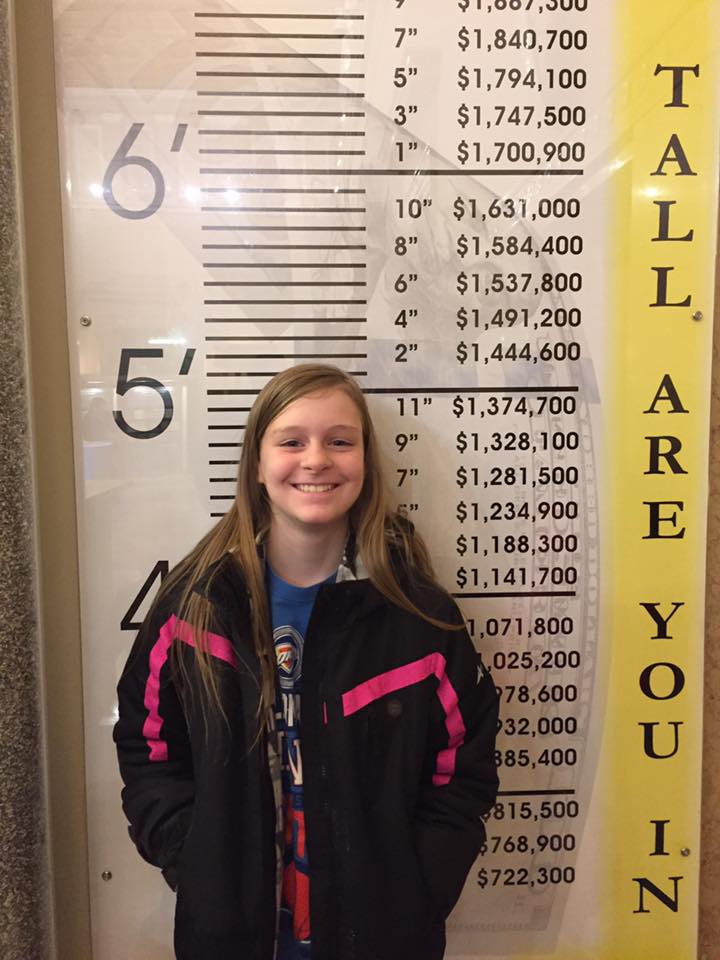
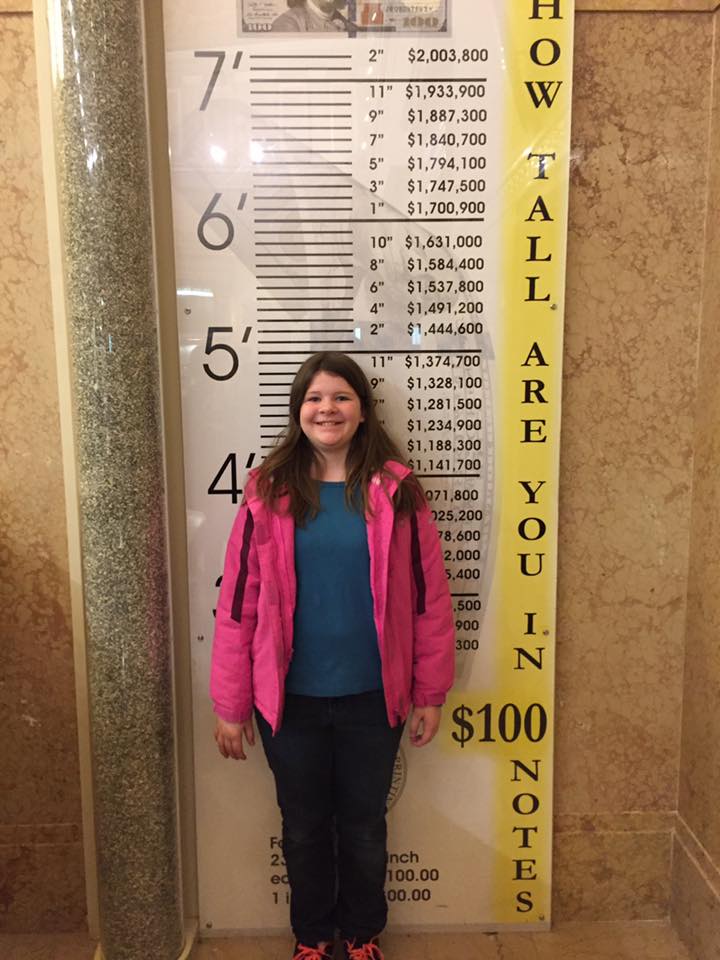
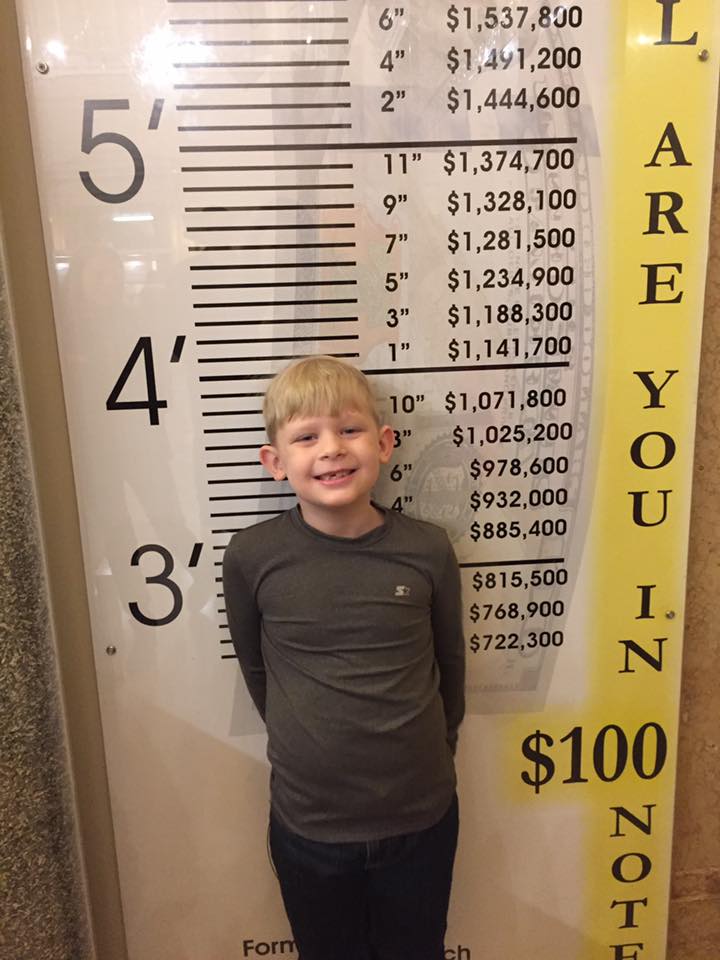
The gift shop area had a height chart, only it was “How Tall Are You In Money?” Here we are:

Terry got some playful criticism for wearing this old jacket – it does look rough! There is a story behind it. We were having very mild weather in Oklahoma, but we knew it could be cold out east, so we took jackets. Terry rarely wears a heavy coat, even in cold weather, so he only has light windbreakers. As we were leaving for our trip, he packed a windbreaker, but he thought he might need something heavier, so he grabbed this work coat that was in our garage and tossed it in the trunk. It turned out he was glad he had brought it because the temps were frigid those first days of our journey. This is Carhartt jacket that his Pa used to wear, so it has sentimental value. I’m used to seeing him in it and thought nothing of it. He did get some stares though, and some comments on social media about it, so I thought I’d explain. I think he will be getting a better one by next winter! The chart says he is about $1.6 million high. He joked and said, “I’m glad I wore my good coat so I’d look like a million bucks!” 😉

Mitchell is worth the most, even though he’s only 14!

The kids had been saving money for souvenirs for many months in preparation for this vacation. They were thrilled to find some very unique money souvenirs in the gift shop. I was able to get the coolest magnet I’ve ever seen: an iridescent $100 bill!

Was this tour worth getting up at 5:30 on the first day of vacation, walking over a mile in traffic, and waiting 40 minutes in the cold? No, but if you can go later in the day, or in the summer, or both, I think your take on it will much better than mine.

After this tour, we wanted to visit the Holocaust Museum which was next door. However, they didn’t open until 10:00. This was discouraging because the time was only 9:15! We hated the thought of waiting in the cold again. Thankfully, a little cafe was nearby and it was open. We enjoyed an expensive snack before going to the next stop.

Oh! and, in case you’re wondering, we did retrieve Mitchell’s pocket knife.

Next week, we will visit the United States Holocaust Memorial Museum. I hope you will join me!


Do you have any books on the shelf that you have been meaning to get to, but keep forgetting about? I do, and this book, In His Steps by Charles M. Sheldon, is one of them. A few weeks ago, I finally pulled it off the shelf to give a go.

It begins with an ordinary day in the life of Pastor Henry Maxwell. We see him preparing a sermon when he is interrupted by a knock on the door. It’s a tramp, asking for a job. Mr. Maxwell says he knows of nothing and sends him on his way. He doesn’t even offer him a bit of food or some water!

The next day, Sunday, the man shows up at the church and points out the hypocrisy of the well-dressed, financially secure and stable church members. They dress up, but they don’t help. They talk the talk, but they do not follow through with action. The man collapses there in the church from malnutrition, and well, I’ll let you read the rest if you haven’t done so already. Needless to say, this causes quite a stir at the First Church of Raymond. Pastor Maxwell is moved by the condemnation of this vagrant. What follows is the challenge to Reverend Maxwell and later, the members of the church, to ask themselves the question, ”What would Jesus do?” before making any decision.

It’s not what I would call a gripping story, but it was well written. Mr. Sheldon wrote this book one chapter a week and gave it as his Sunday evening sermon way back in 1896 (Just think, Cleveland was President!), and soon caught the attention of other publishers and was reprinted around the world. Because only part of the manuscript was sent to the copyright office in Washington, D.C., the copyright was never issued. In His Steps was public domain, therefore, Mr. Sheldon never received any royalties.

The lives of the members of First Church were changed forever by pledging not to make a choice without asking the question, “What would Jesus do?” and then prayerfully seeking the answer. While this book successfully explores this idea, it must be noted that this is pure fiction.

A few thoughts:

I believe that true Christians are already striving to do what Jesus would do. We do that because we have the Holy Spirit driving us, chastening us, and moving us as we go through life. Can we ignore those impulses? Of course. But when we do, it is sin, and the Holy Spirit chides us for it. We do not need to wear a bracelet with “WWJD” on it to remind us. (You may recall that was a popular fad a few years ago due to this book.)

It was an entertaining story. Due to my “reading ADD”, I finished two other books while reading this one, and I also began reading two others. So, it wasn’t extremely exciting or I couldn’t have put it down.

I didn’t find any solid theology in this book, but as far as Christian fiction goes, it was excellent.

If you haven’t read it, I think you will enjoy it.

Until next time,


This week’s term: Free Will – Webster’s definitions:  “1. Freedom of decision, or of choice between alternatives. 2. The freedom of the will to choose a course of action without external coercion, but in accordance with the ideals or moral outlook of the individual.” Rightly understood, these are both Bible and Baptist doctrines and can be held affirmatively. However, the common Arminian argument for this term today is that in the fall, man’s will was somehow insulated, so that he may make choices without regard to, or restraint from, his fallen nature. This is absolute heresy. 

Last week’s term: Antinomianism – Anti (against) nomia (law). The teaching of antinomianism is that whereas Christ is glorified by putting away our sin, the more we sin, the more glorious He becomes in His work of salvation. Therefore, we actually cause the grace of God to abound by sinning.

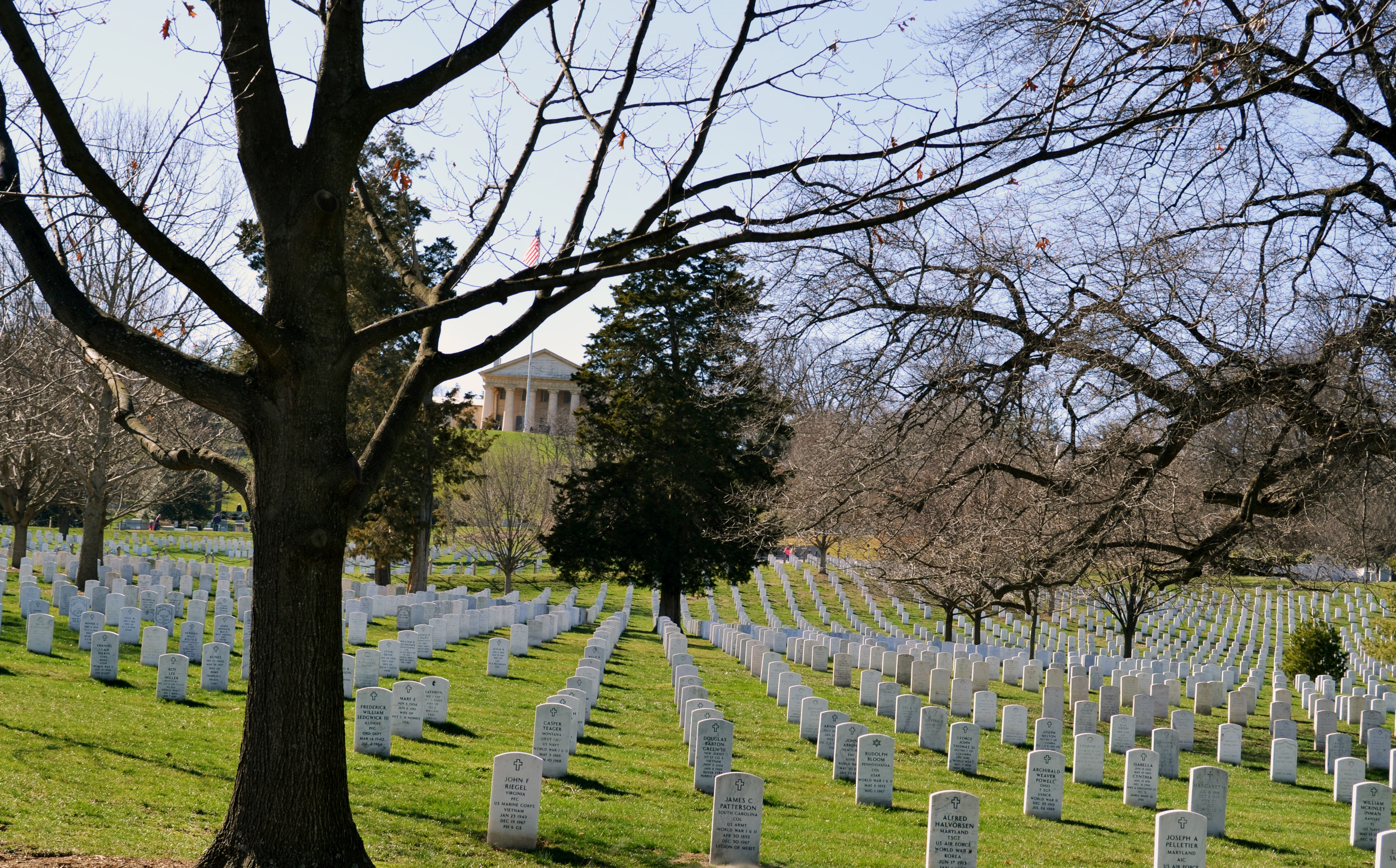
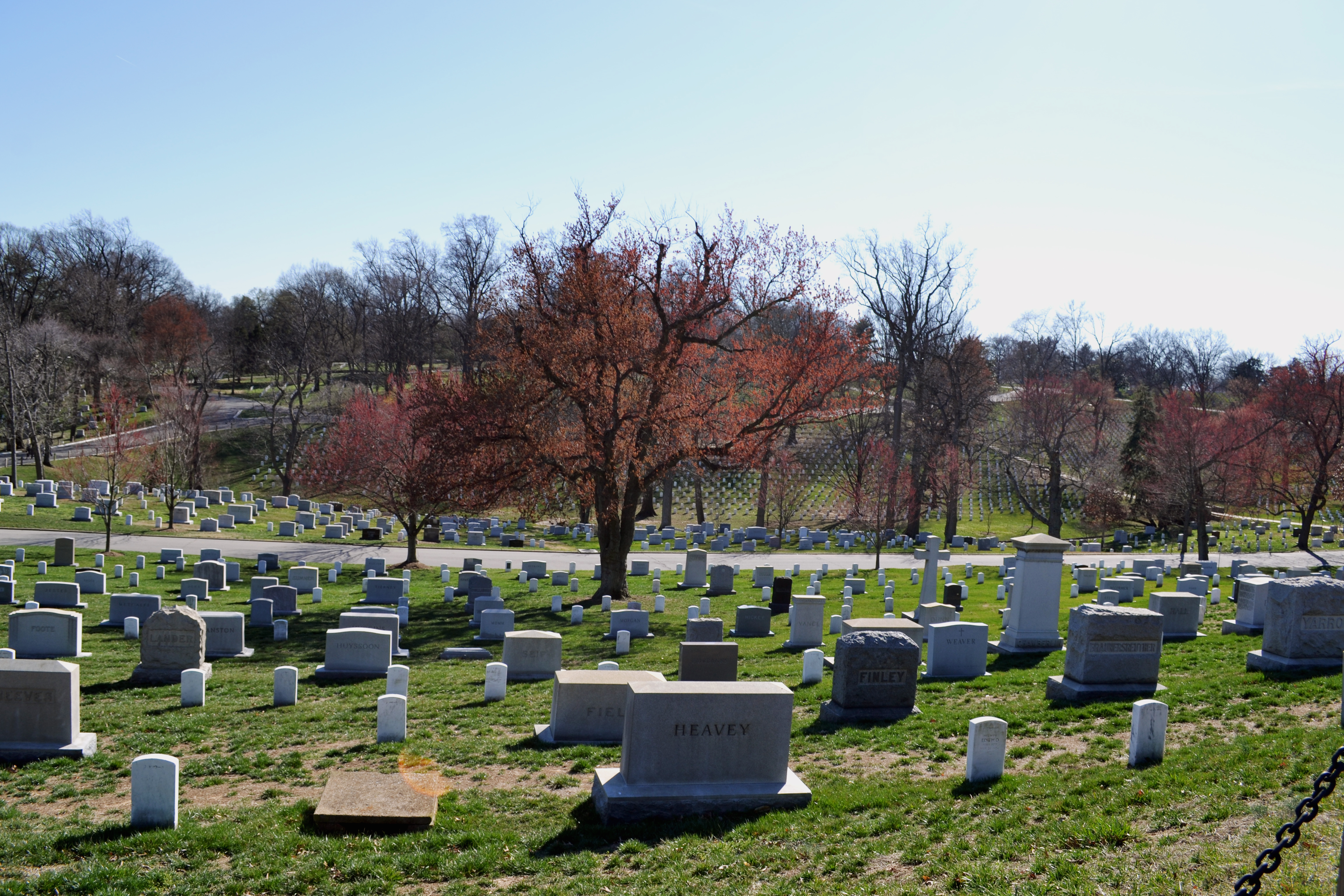
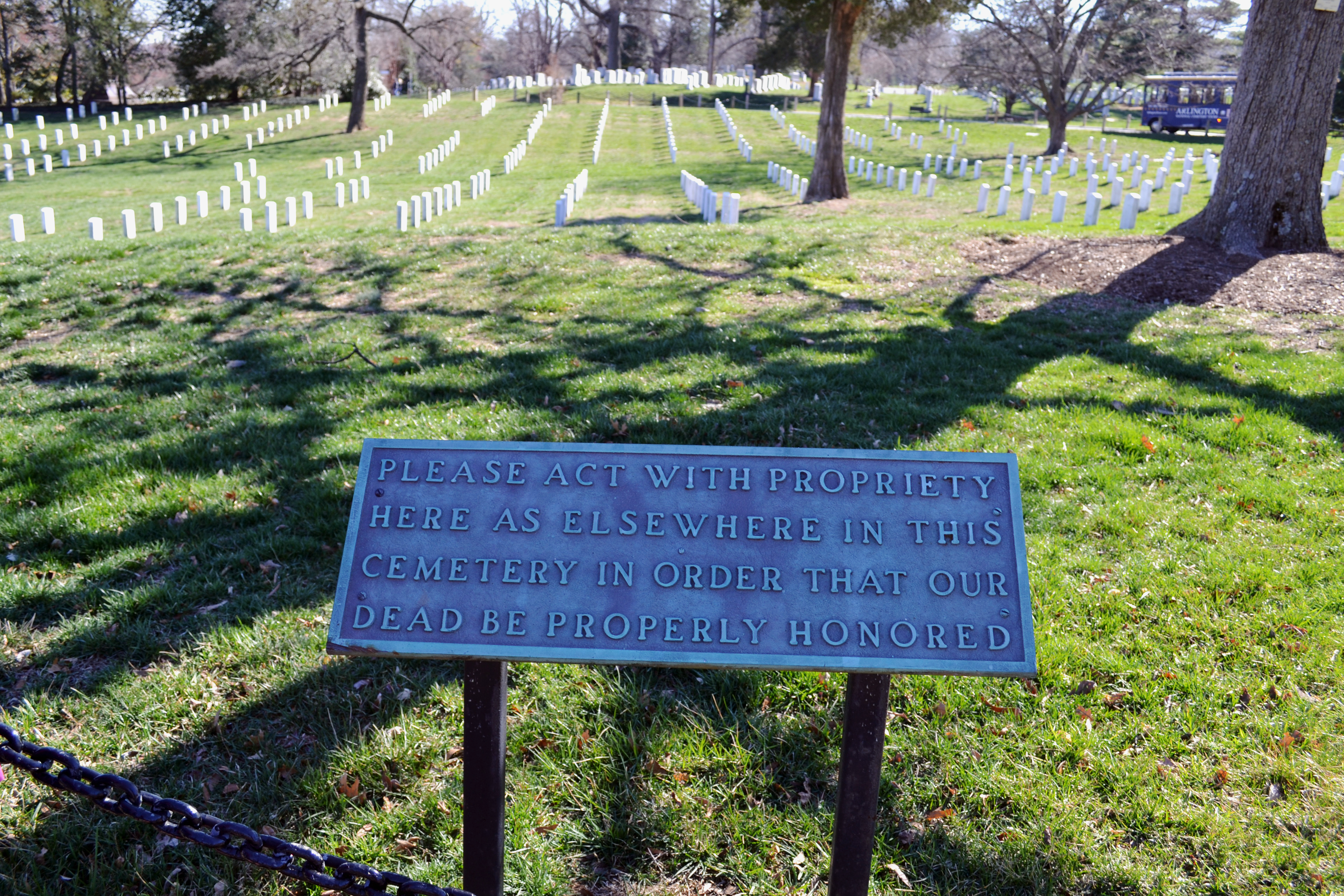
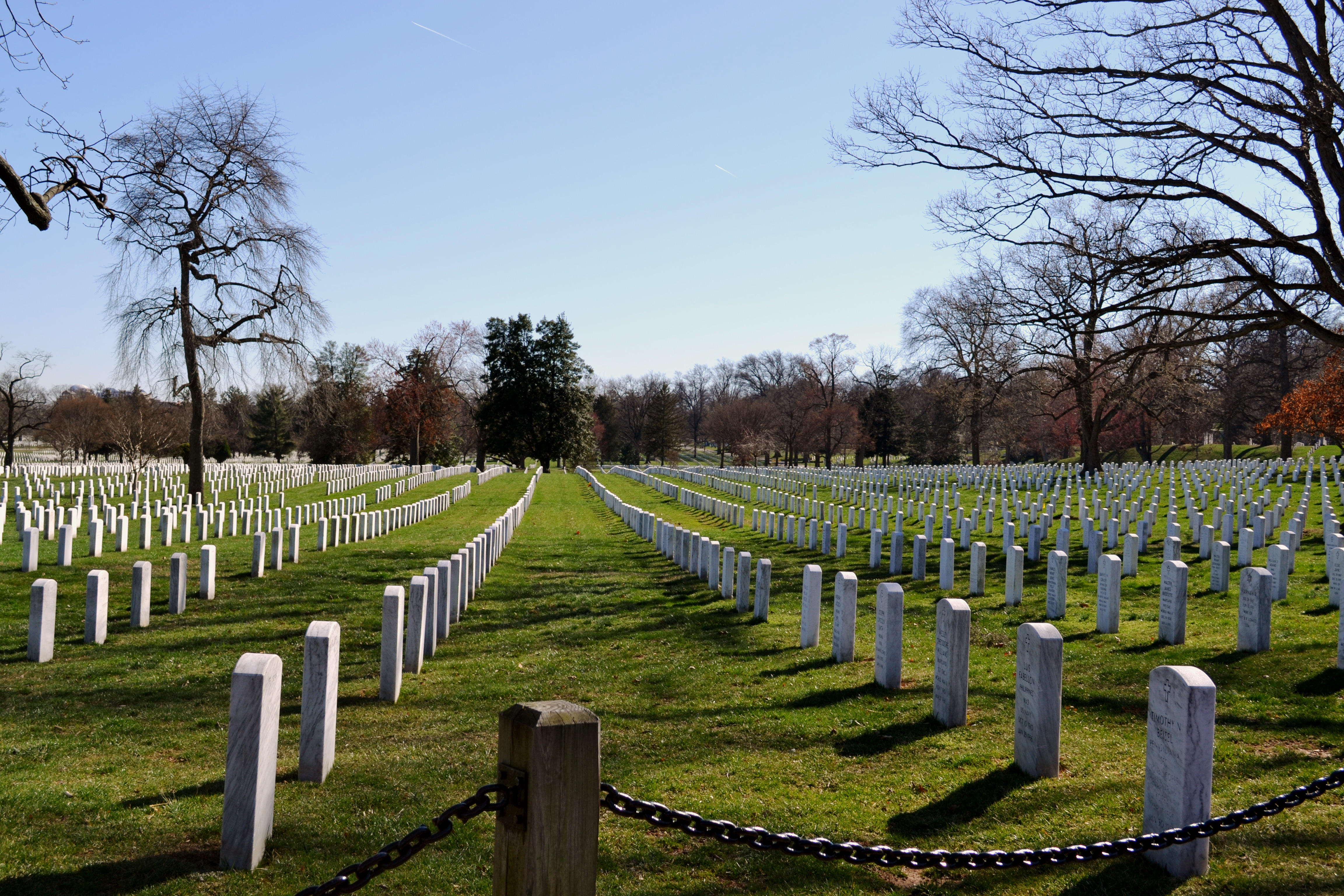
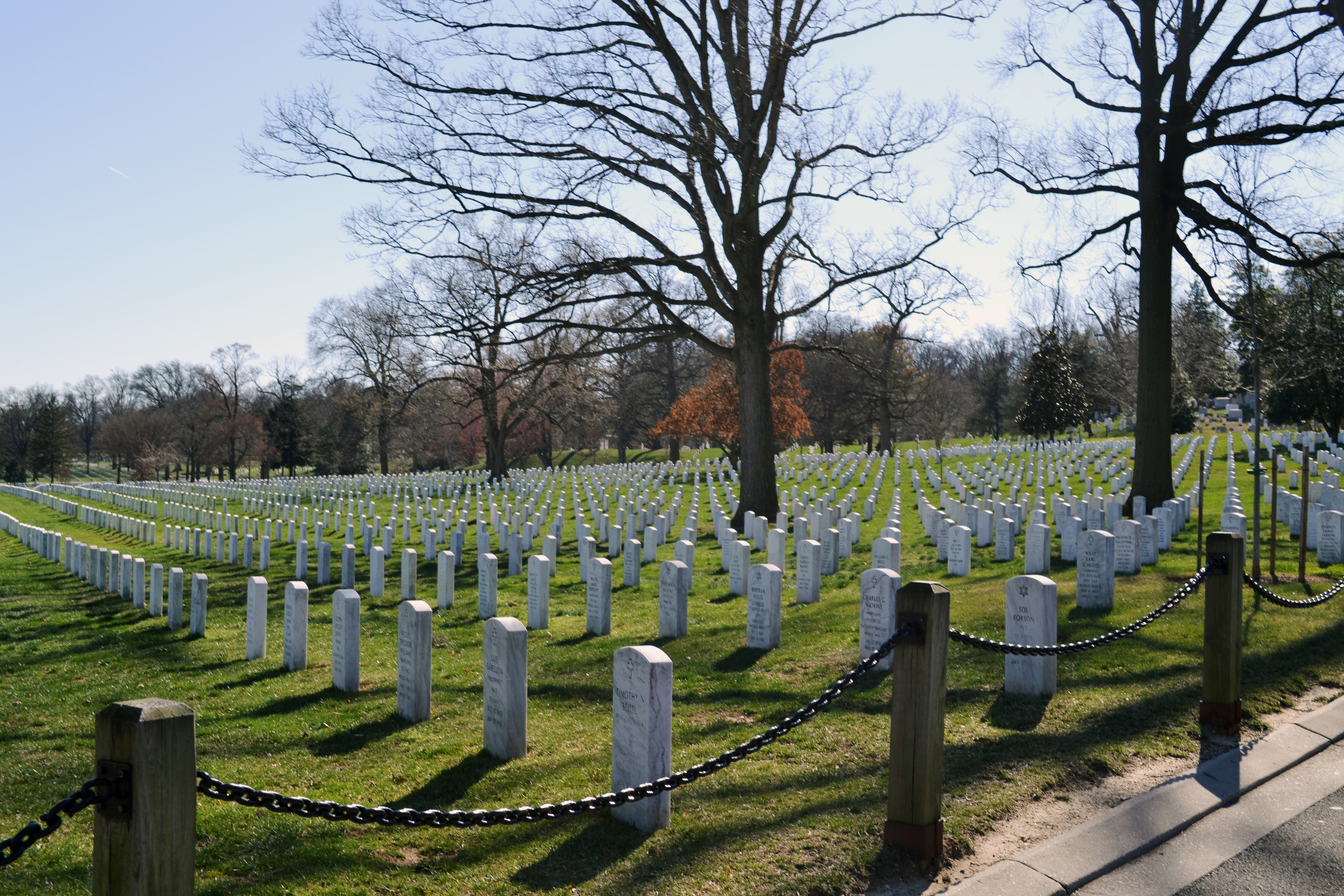
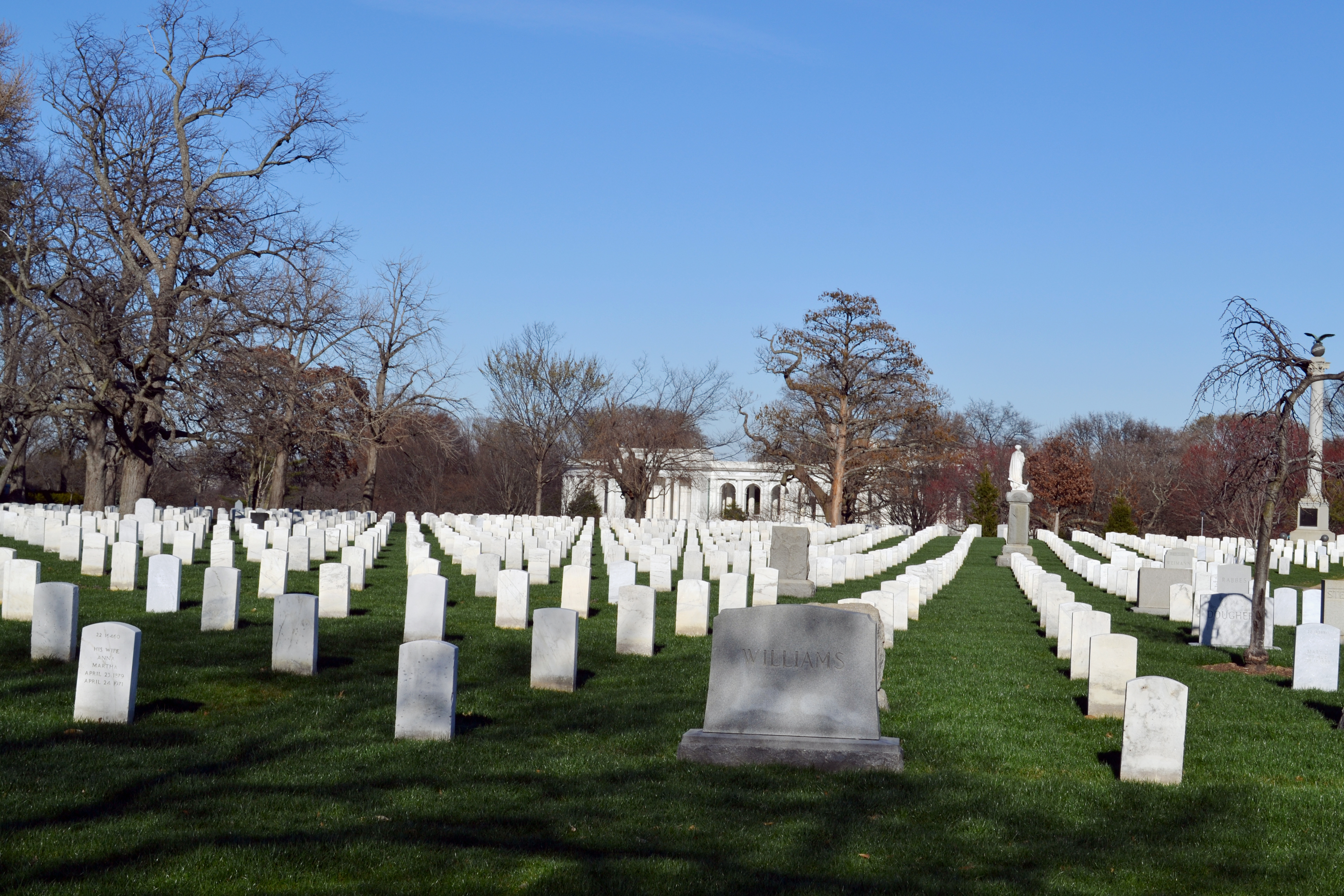
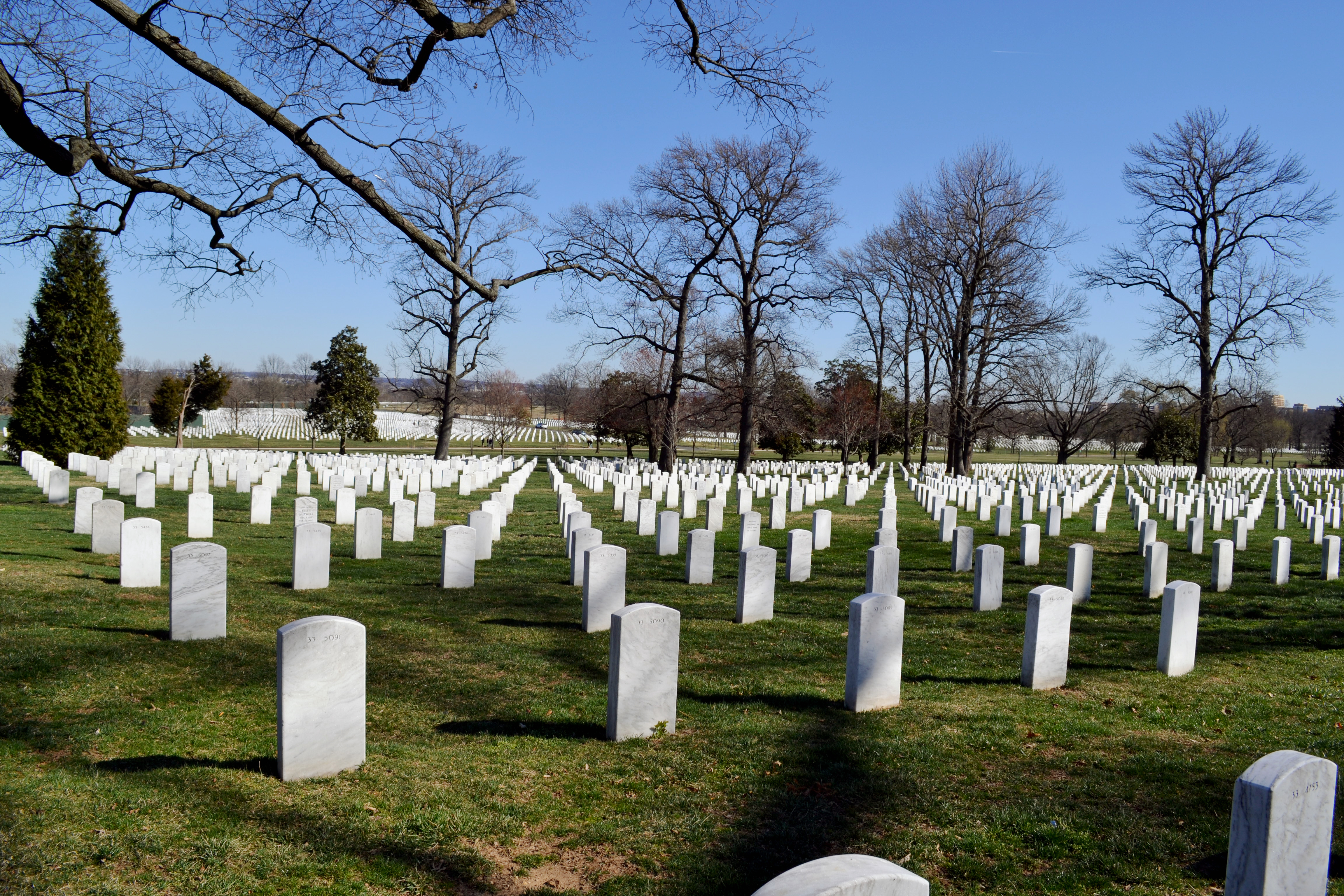
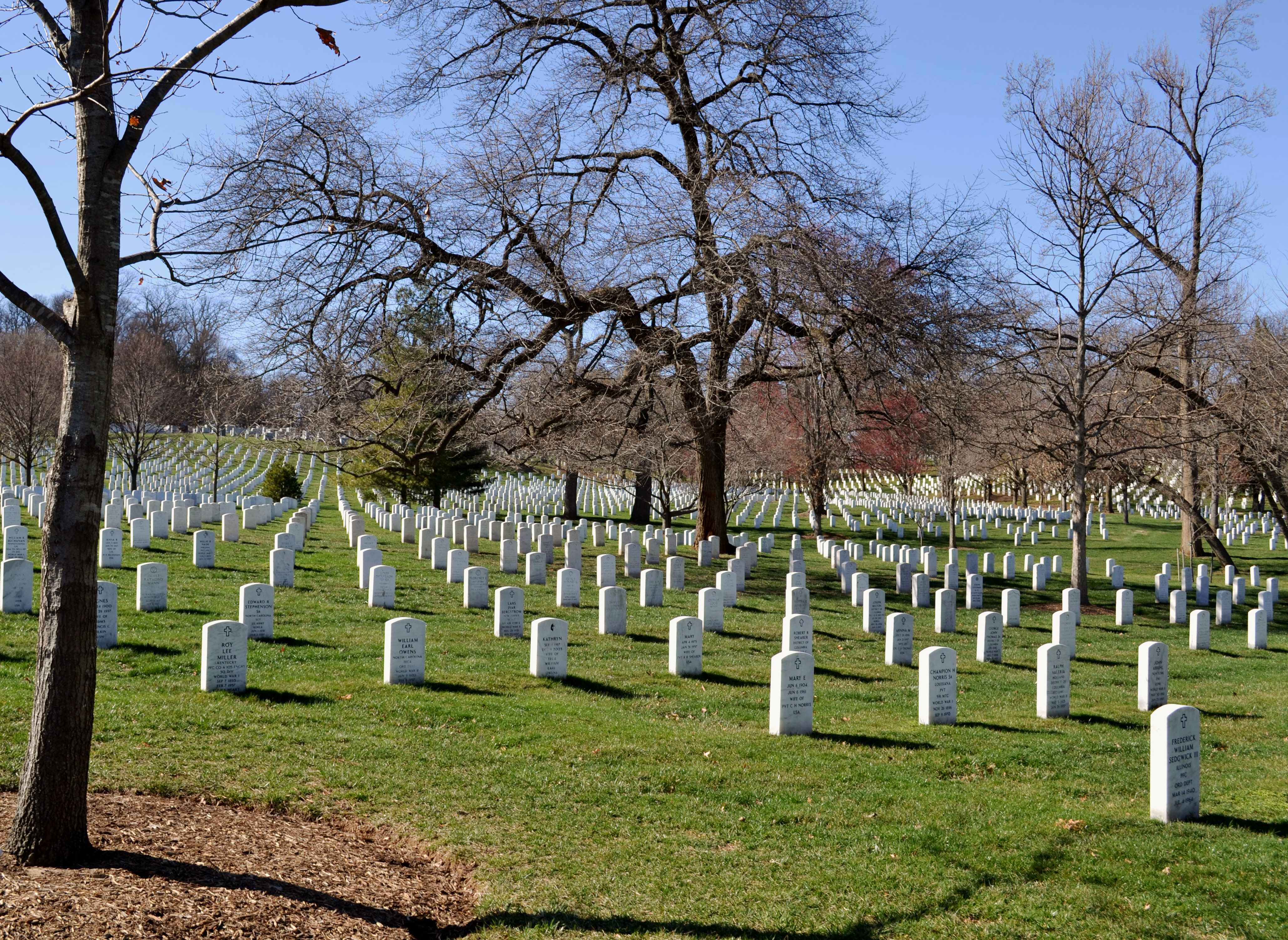
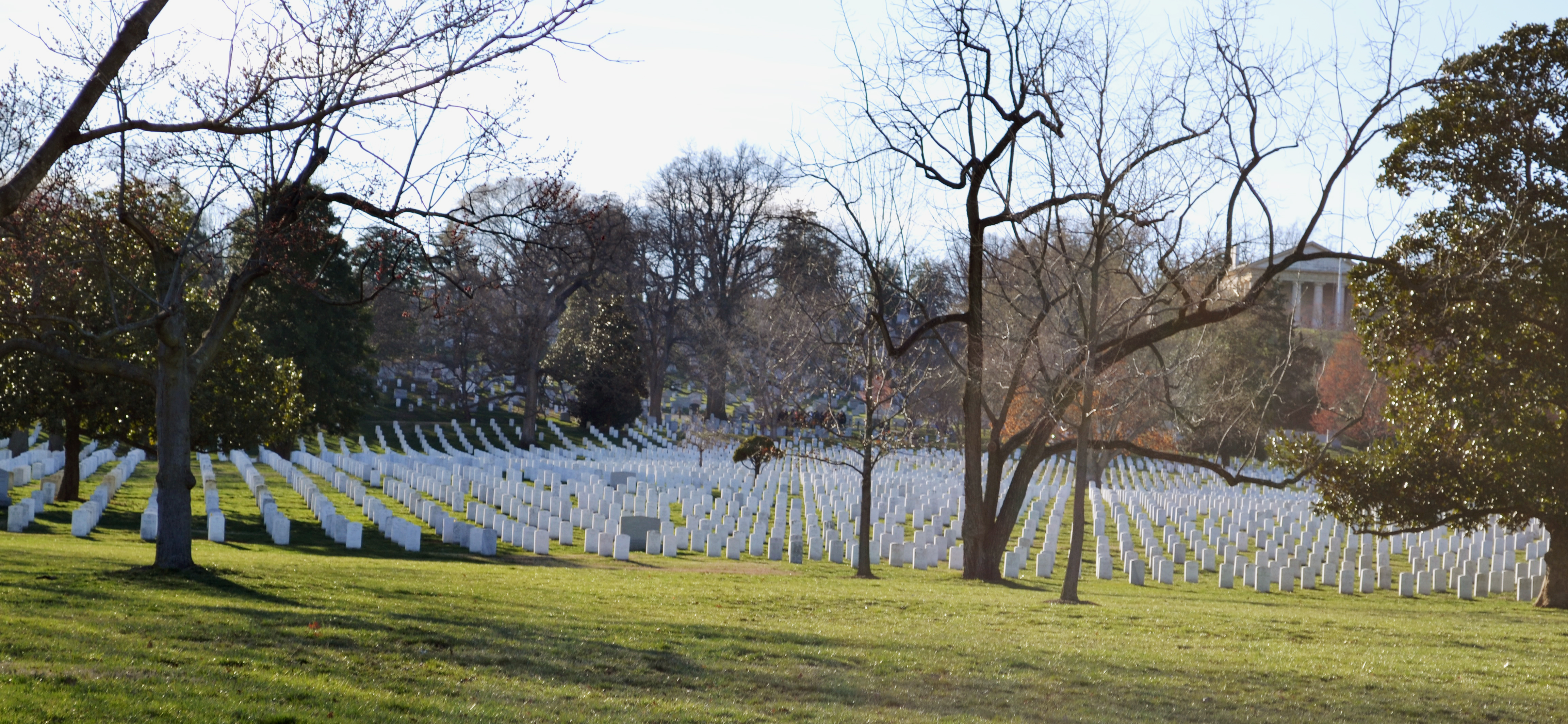
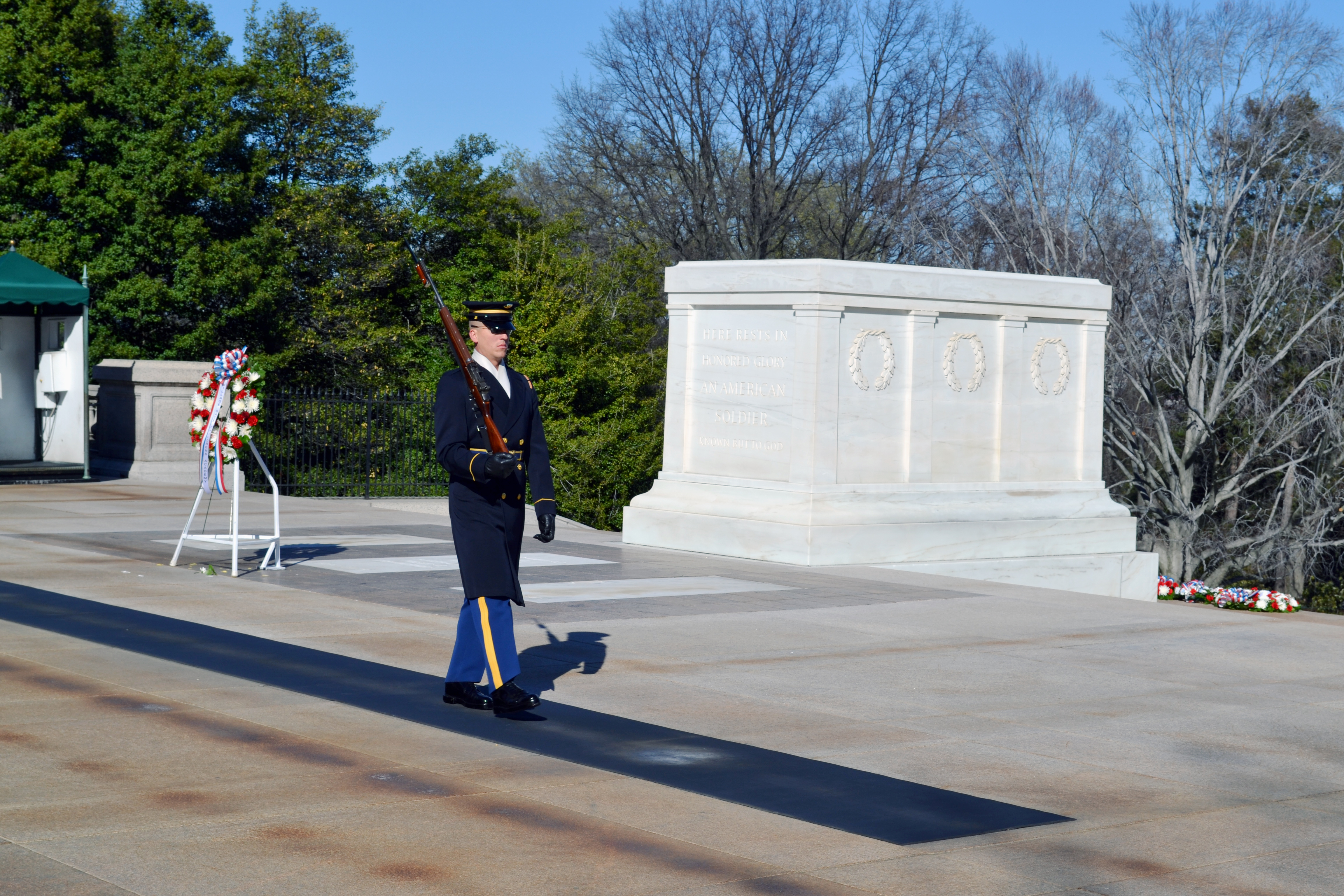
This week on the blog, we are visiting the lovely, awe-inspiring Arlington National Cemetery. After church on Sunday, March 5, we traveled south to Washington, D.C. Before we even checked into our room, we headed out to see some sites. We wanted to see the changing of the guard at the Tomb of the Unknowns and visit some other graves. Even though I had seen photos of Arlington over the years, I was in astounded at the sheer number of tombstones! It was an ocean of them, as far as the eye could see in any direction, or so it seemed. I was also surprised that a cemetery could be so beautiful.

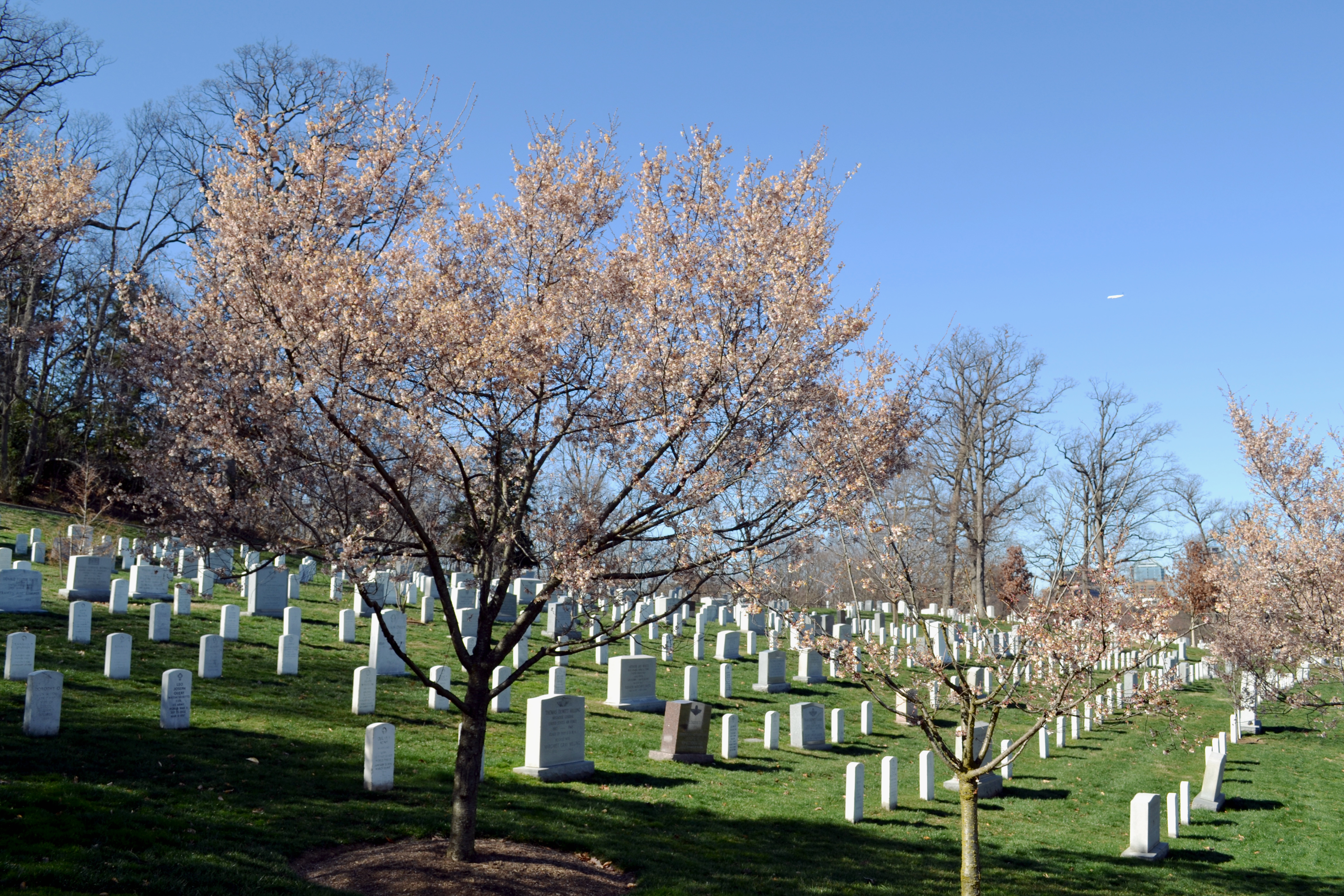
Everywhere you looked, there were rows and rows of tombstones, all in perfect lines, no matter which way you turned. The grass was lush and verdant even though spring had barely peeked its head out. The Lord gave us a special bonus to allow us to see the early buds of the cherry blossom trees, too. They were not expected to bloom until early April.

The home at the top of the hill is Arlington House. That was the home once owned by Robert E. Lee’s wife and where he and his family lived prior to the Civil War. The property at Arlington was commandeered by the Federal Government in retaliation for his part in the Confederacy. Without the Civil War, we would have no Arlington National Cemetery.

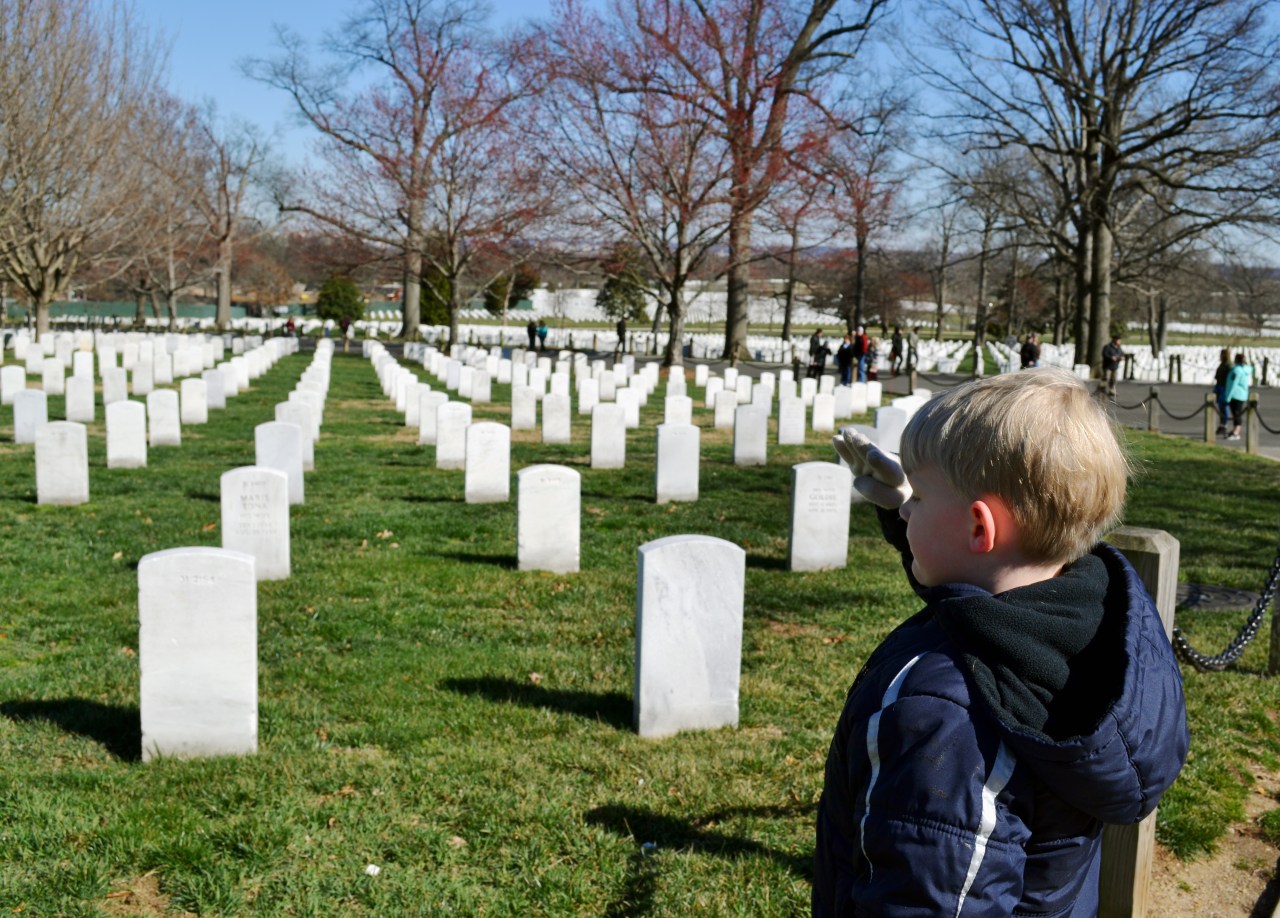
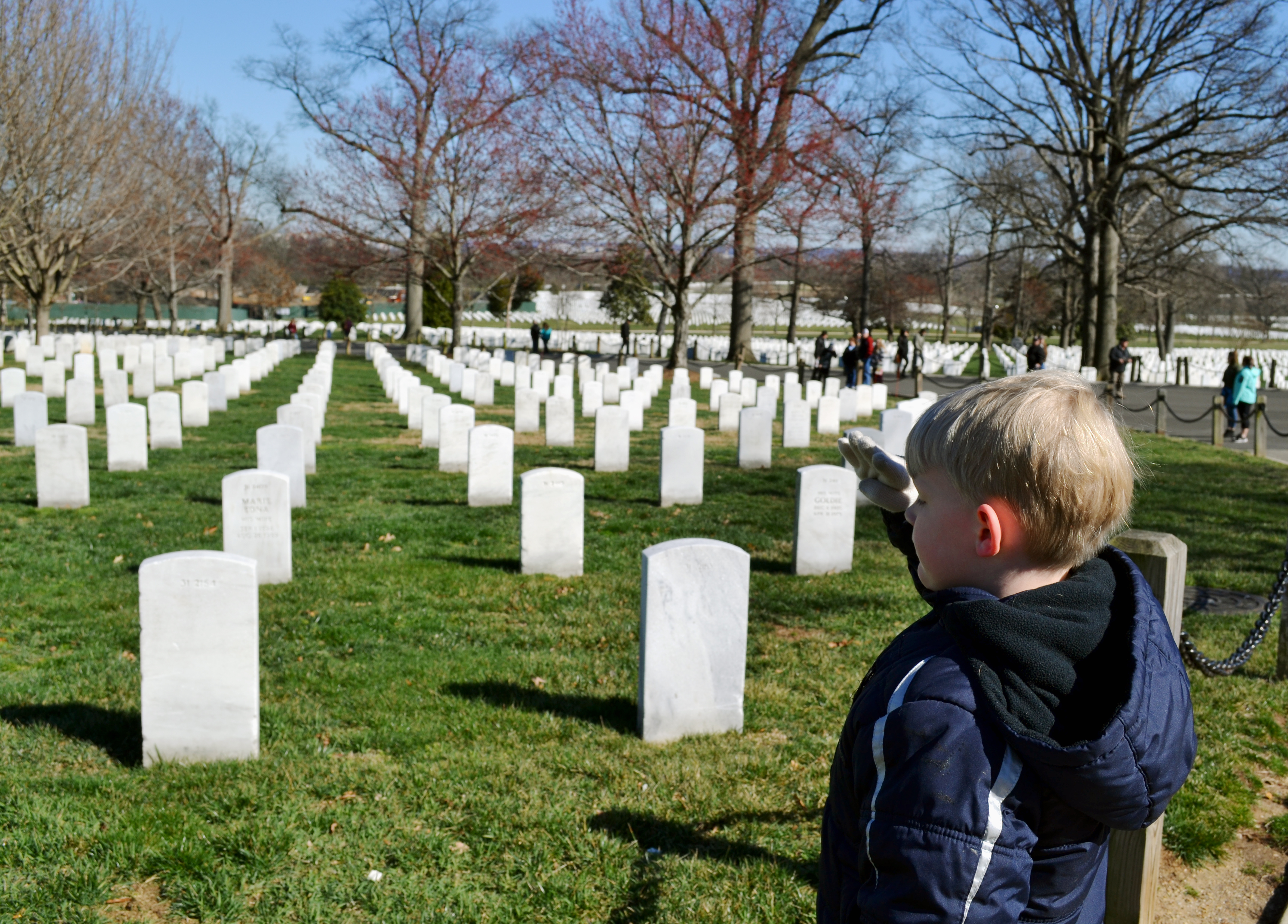
For some reason, Matt immediately stood at attention and saluted. It was so sweet.

Cherry Blossoms blooming.

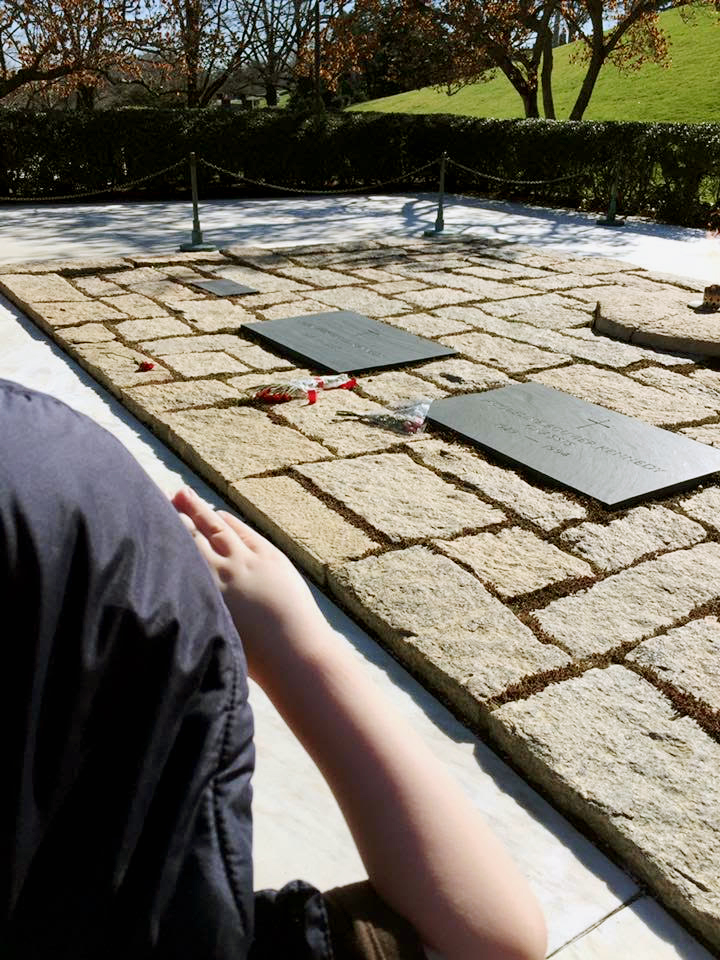
On our way to the Tomb of the Unknowns, we stopped to see JFK’s, Jackie’s, and their baby, Patrick’s, grave with the eternal flame.

Once again, Matt saluted. It reminded me of the photo of JFK Jr. at his father’s funeral.

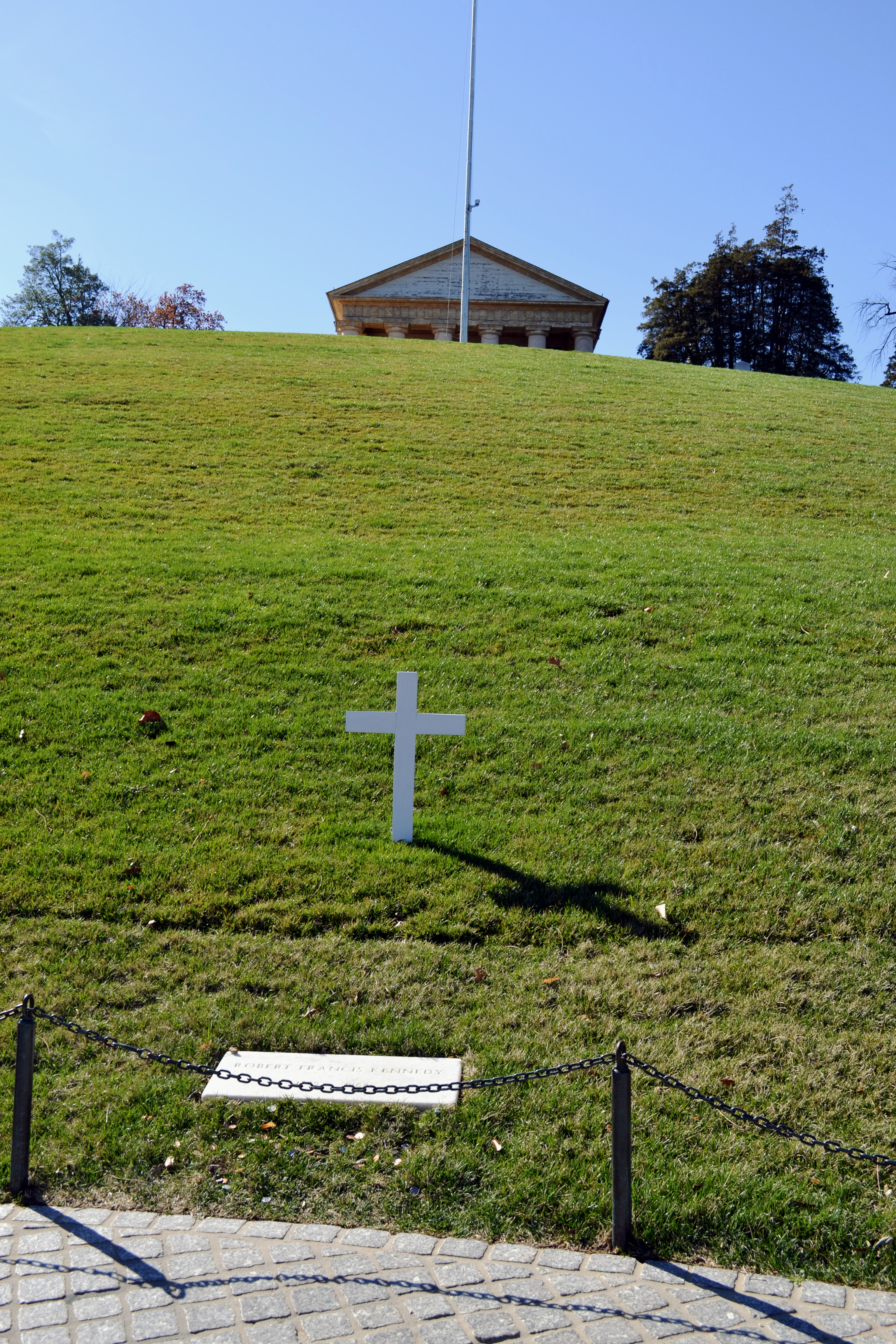
RFK is buried near his brother, but he doesn’t have a very glamorous area. He is buried in view of Arlington House, so that’s something, I guess.

The Washington Monument from JFK’s grave.

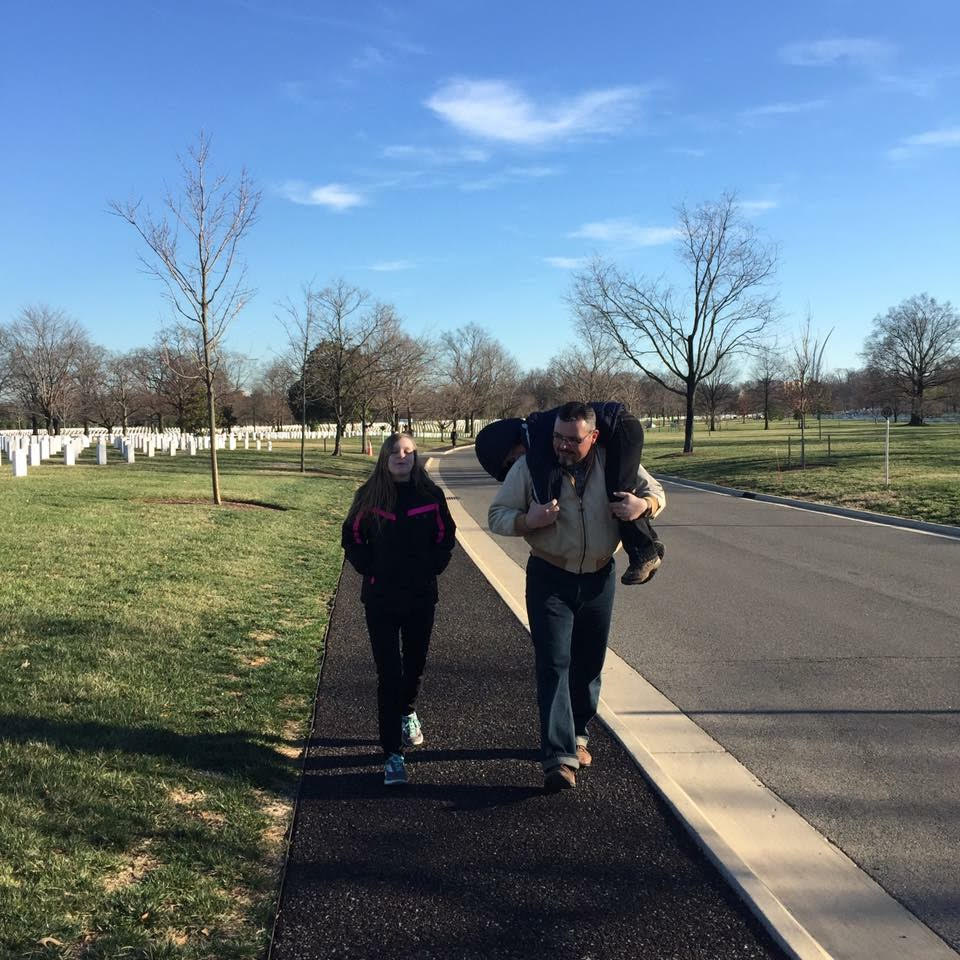
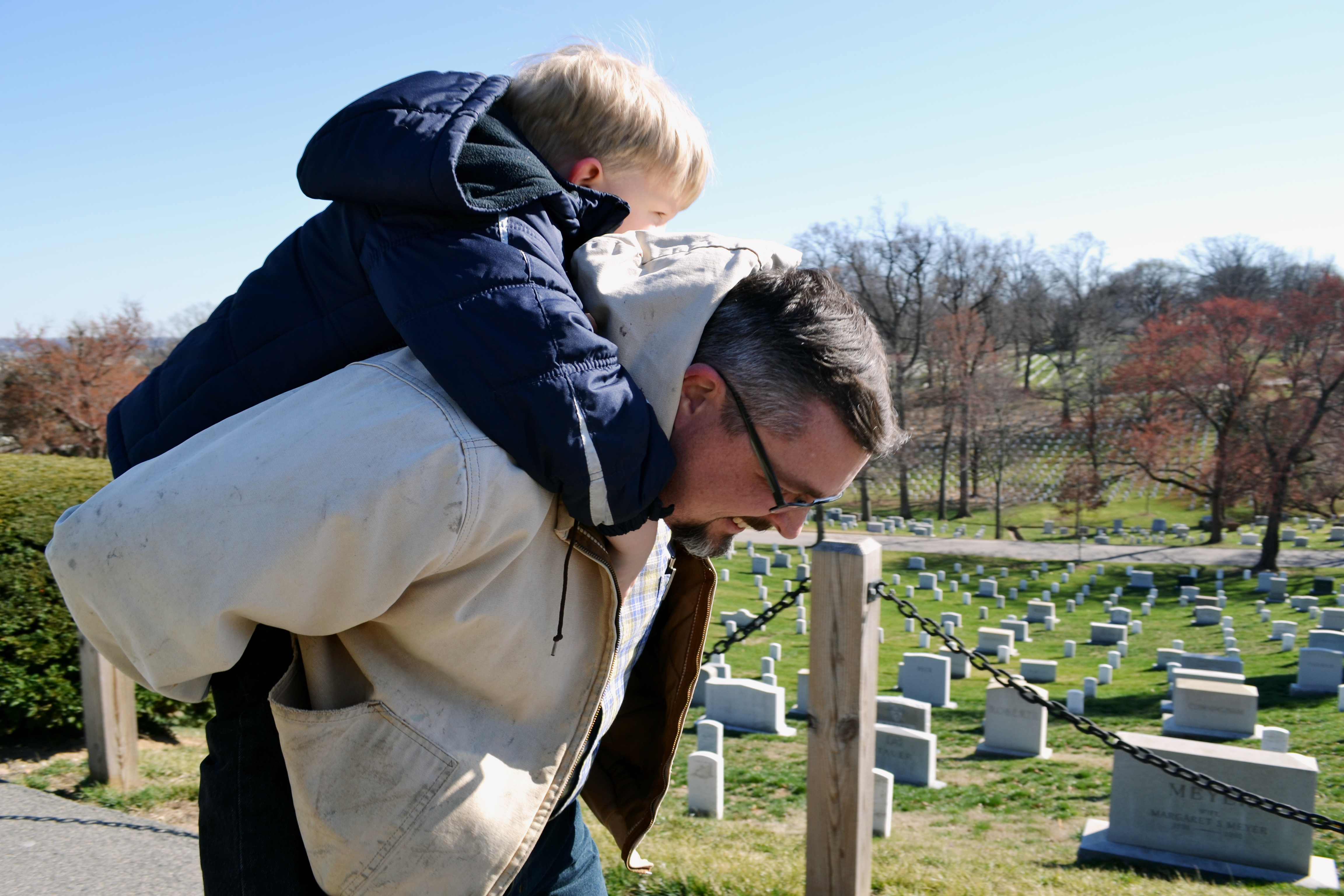
Arlington has a great many hills. We were in a big hurry to find our way to the Tomb of the Unknowns. Climbing the hills a fast clip definitely got our heart rates going. Matt had to be carried part of the way for us to make it in time.

He sure has a great dad!

We made it!

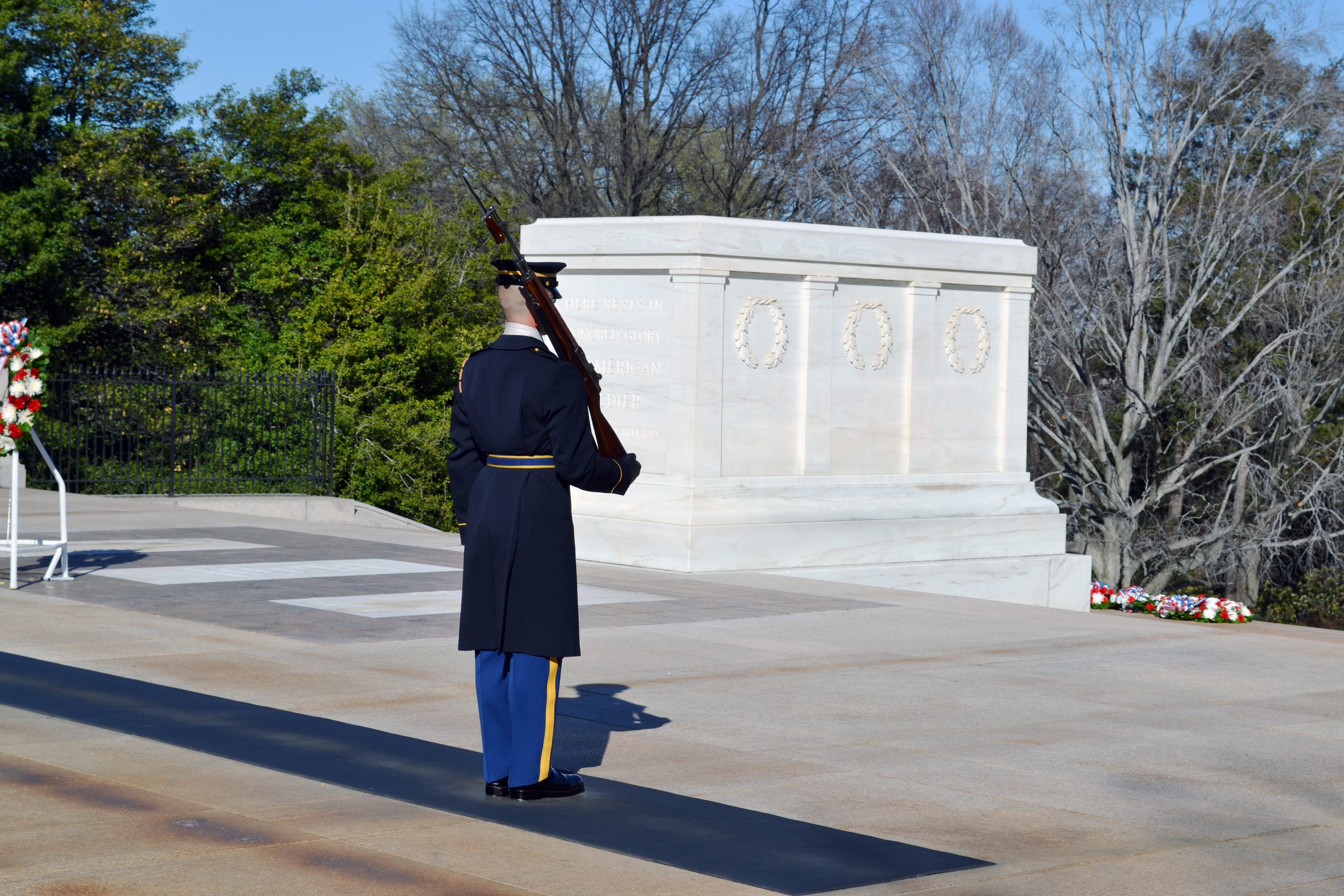
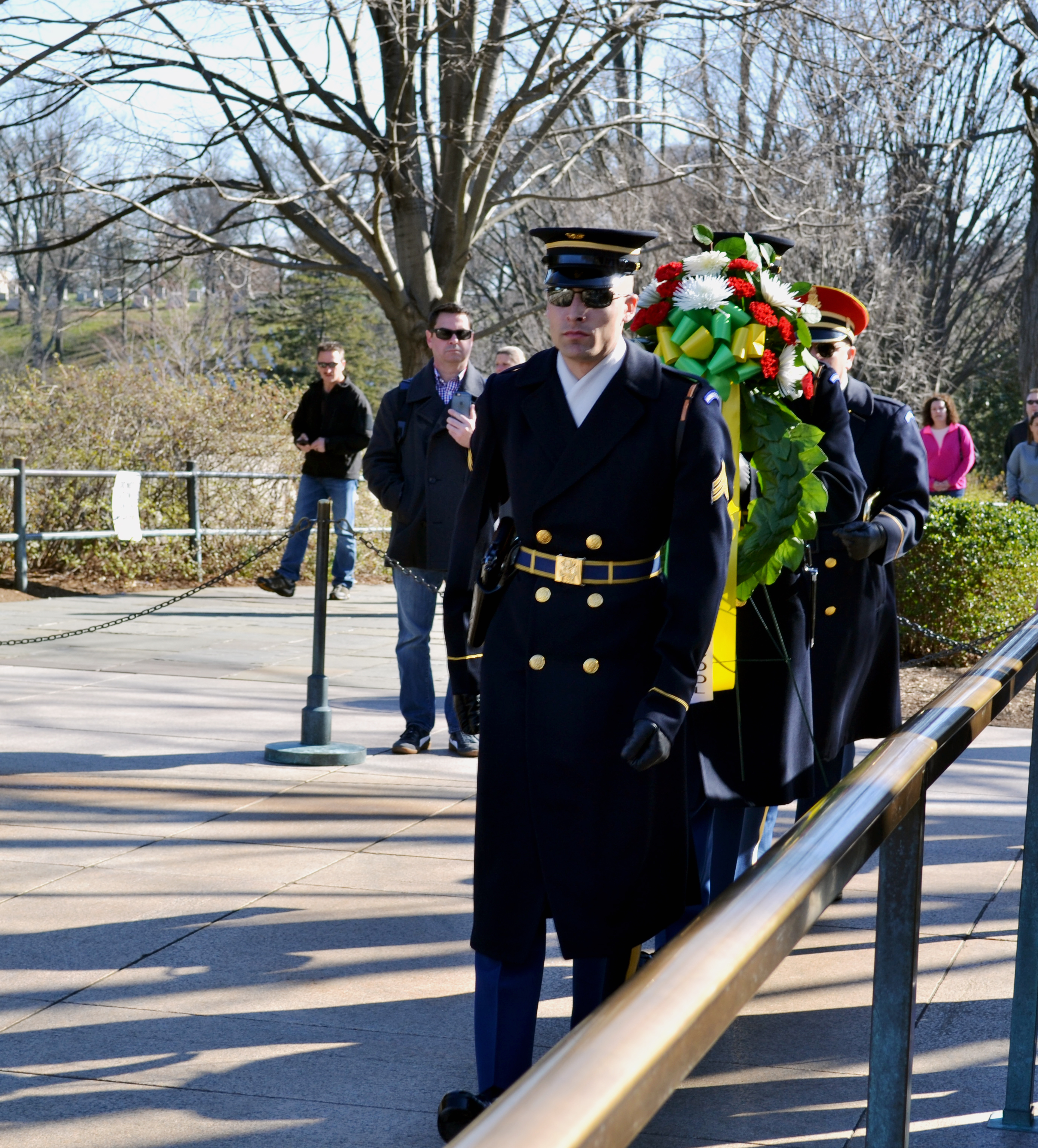
We not only saw the changing of the guard, but also two wreath-laying ceremonies. The men brought out the wreaths, representatives from the schools donating the wreaths came out, were escorted out to place the wreath at the tomb along with a Marine. Then, we were ordered to stand and salute while “Taps” was played on the trumpet. It was very moving to hear that haunting tune played in such a solemn place. “Taps” was played regularly during the Civil War to let the men know it was time to bed down for the night. It is appropriate that it has become the melody to honor our fallen heroes.

This plaque was on the wall in the guard’s area.

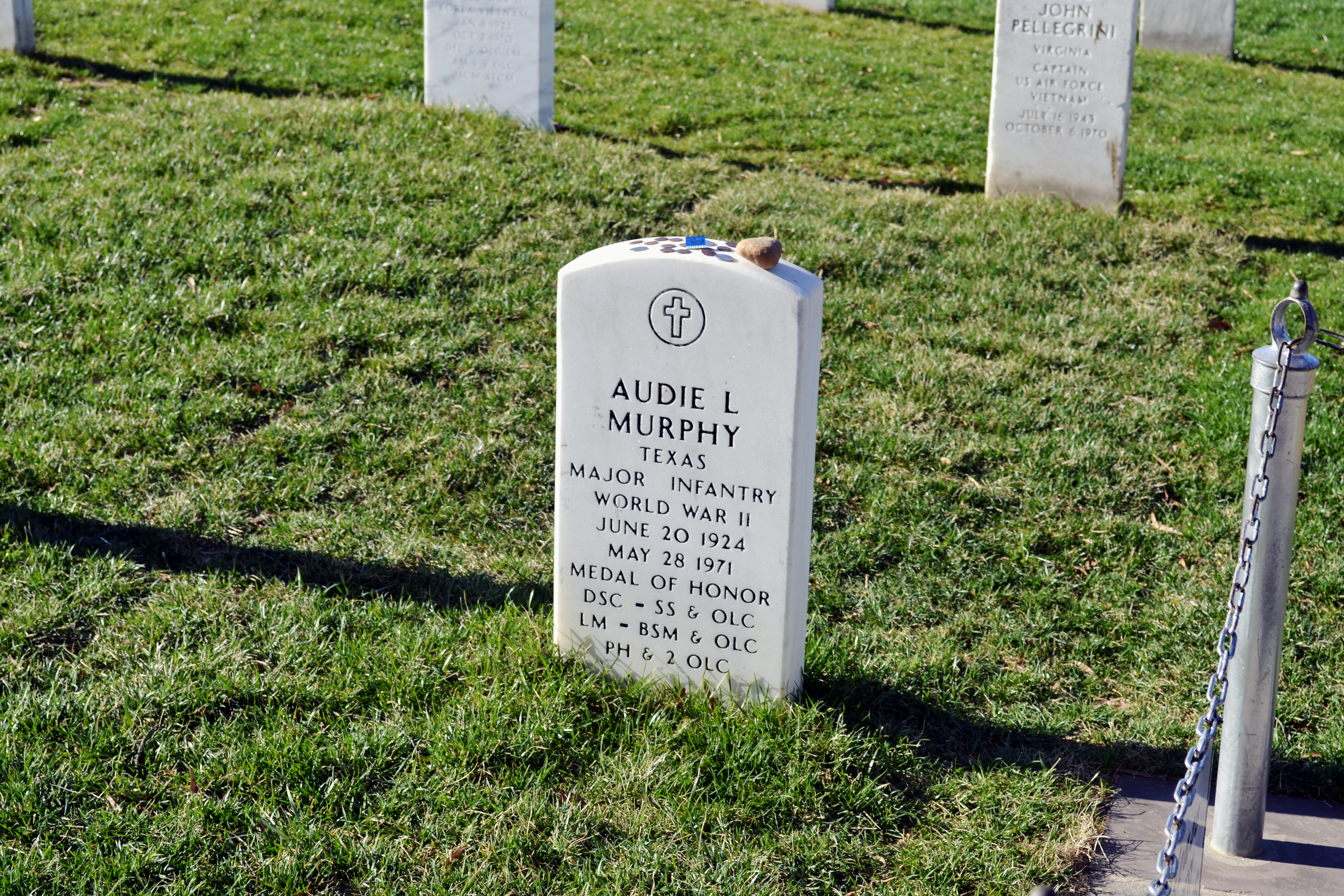
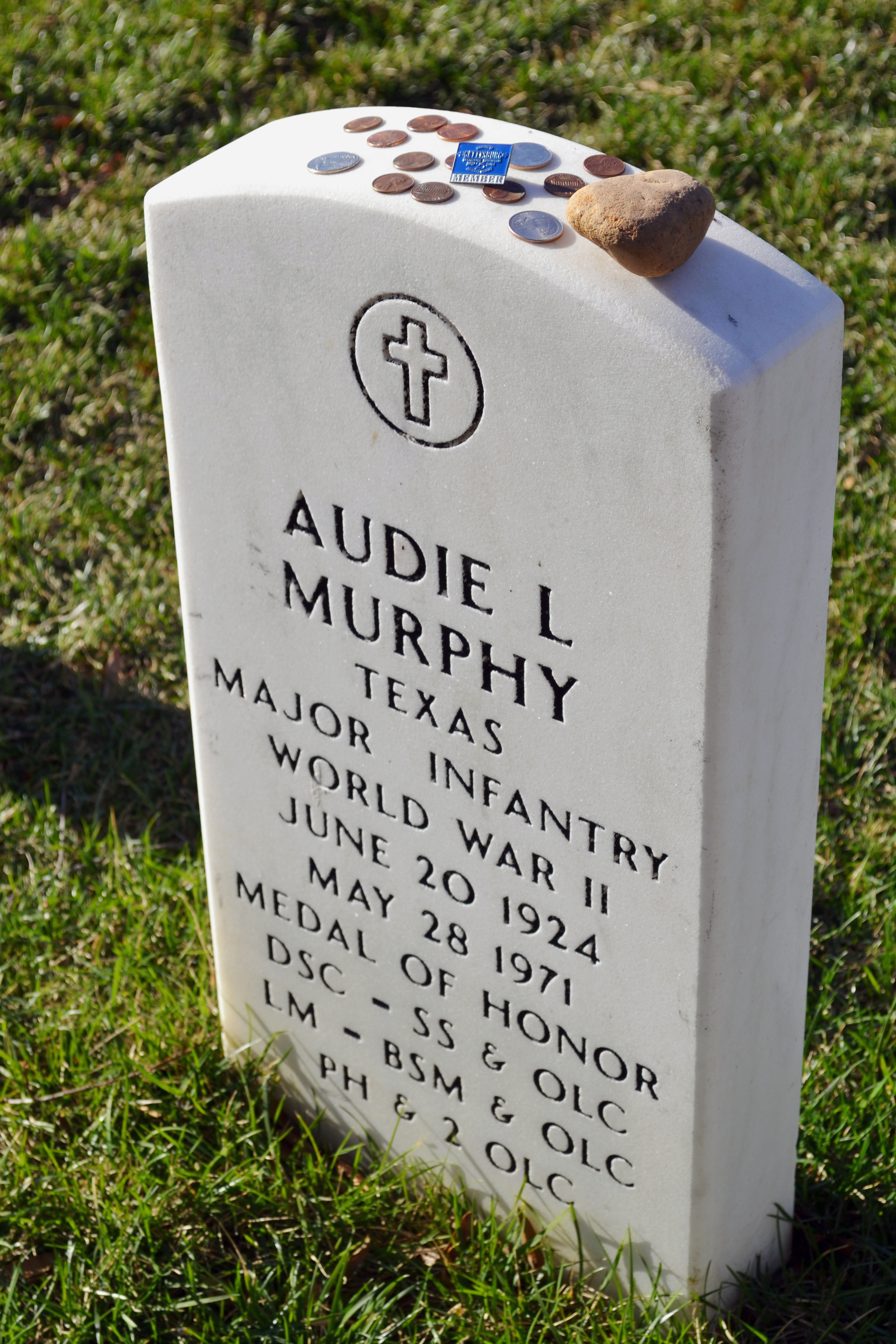
Next, we found the grave of Audie Murphy. He was the Texas boy who would go on to be the most decorated soldier of World War II. What a guy! When I was young, I saw the movie about his life, in which he also stars as himself. My dad really loved and admired him. I watched his biography on A & E where his sister tells how he used to shoot rabbits to put food on the table during the depression. “He was a hero to me before he ever did anything [in the war]”, she said.  It was an honor to stand and pay silent tribute to this American hero.

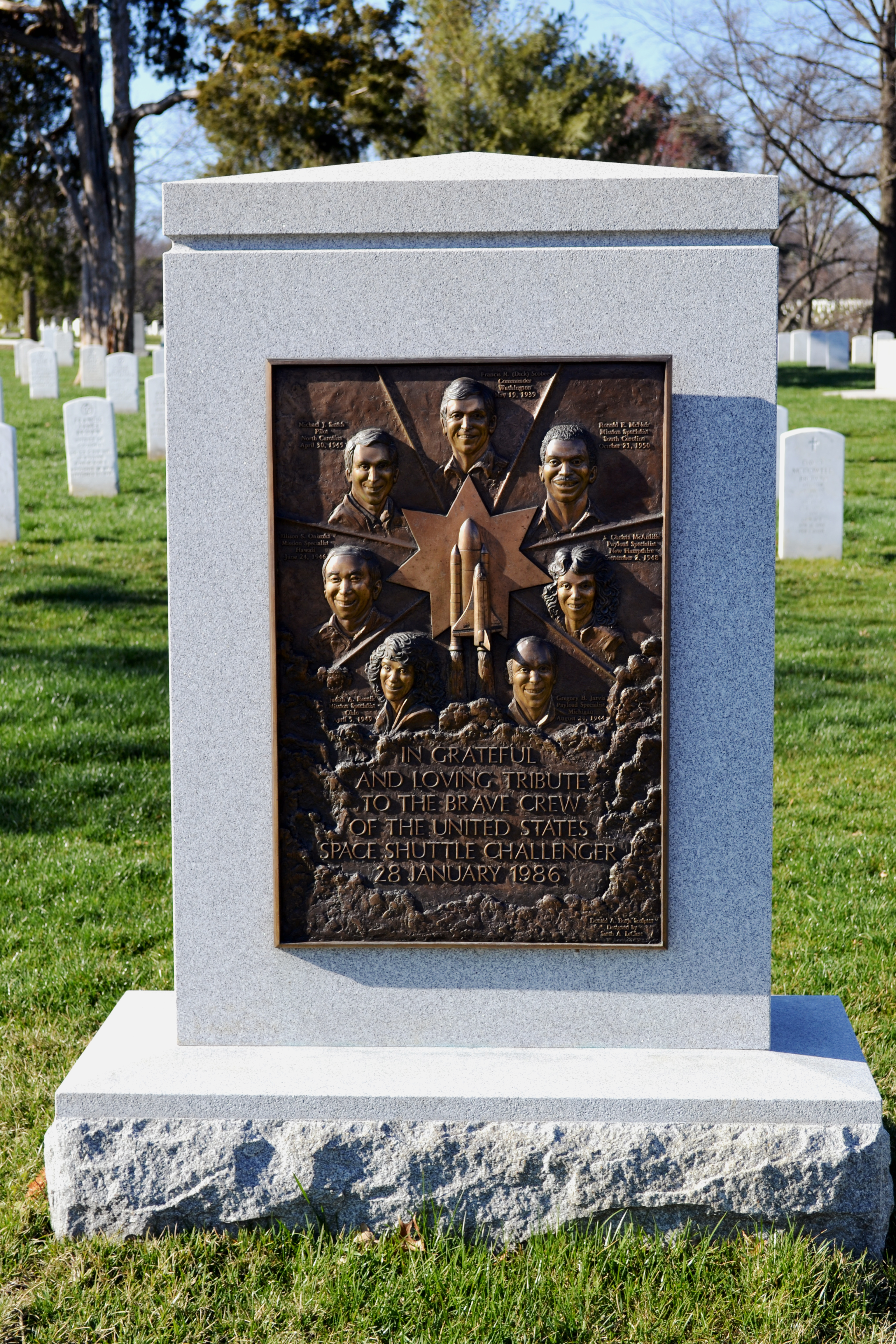
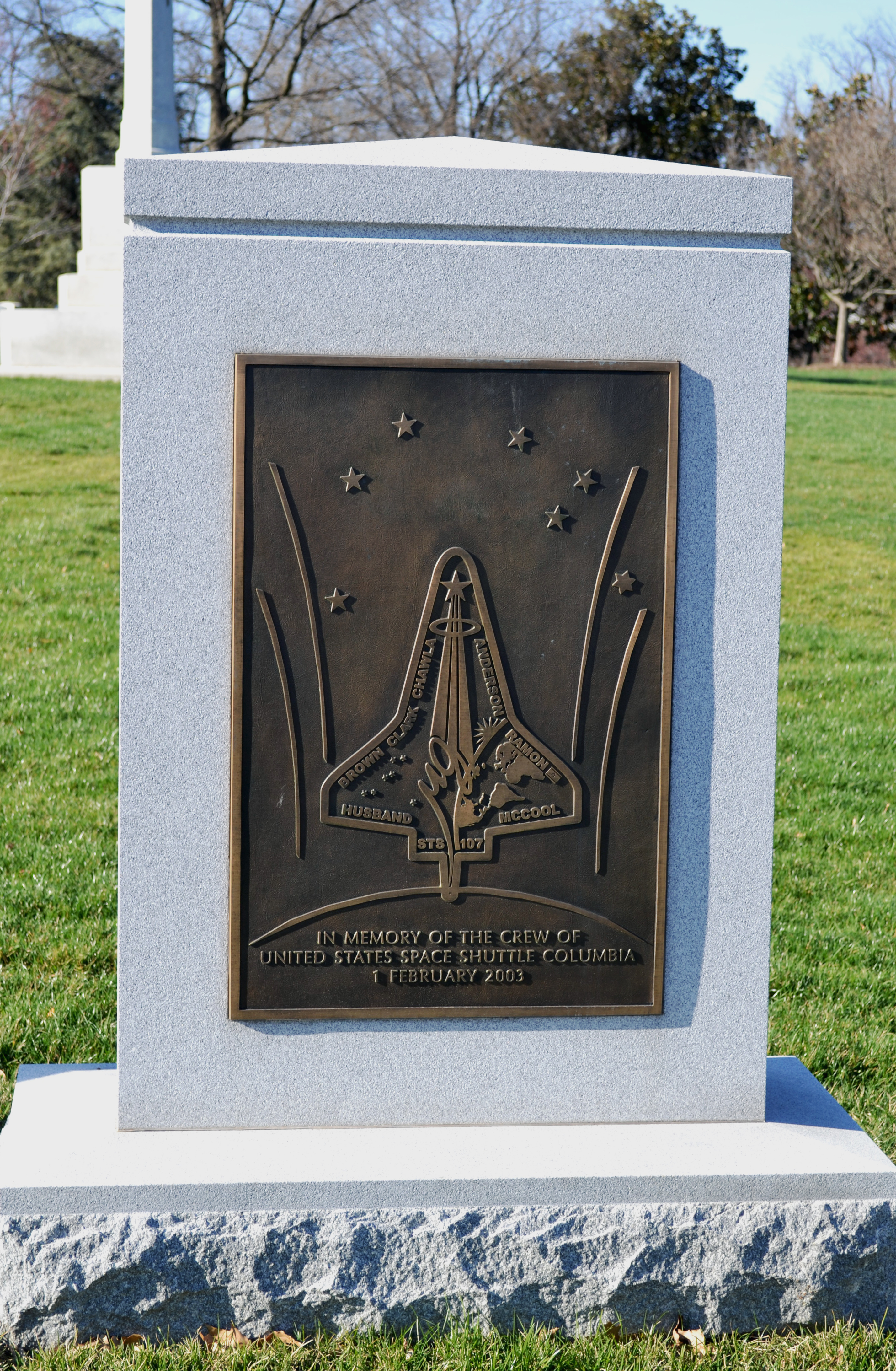
Near Audie Murphy’s grave, were these memorials to the crew of the Challenger and Columbia

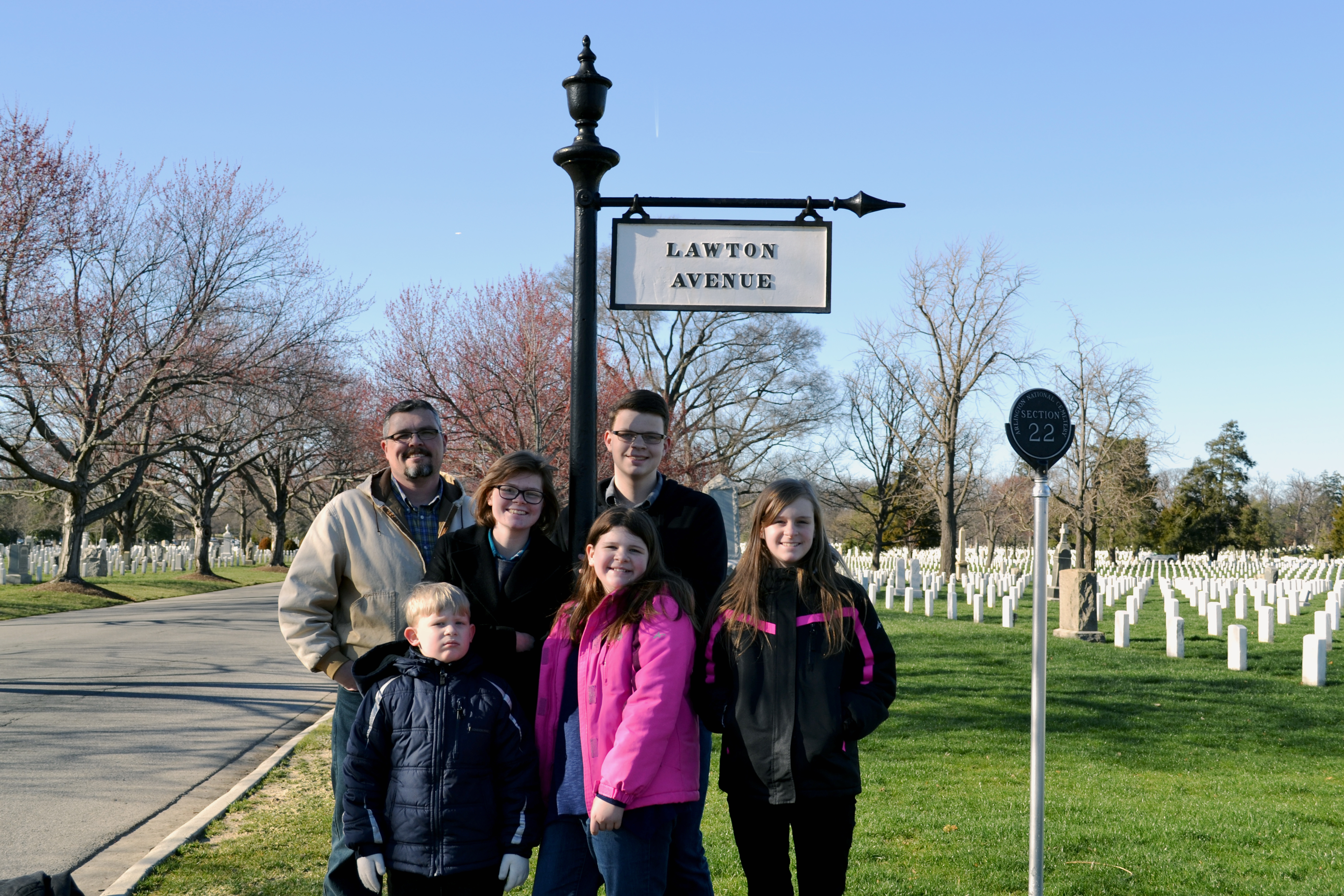
While walking through the cemetery, we had to stop and get a photo here:

We were on Lawton Avenue! Our town is named after General Henry Lawton. He fought for the Union in the Civil War.

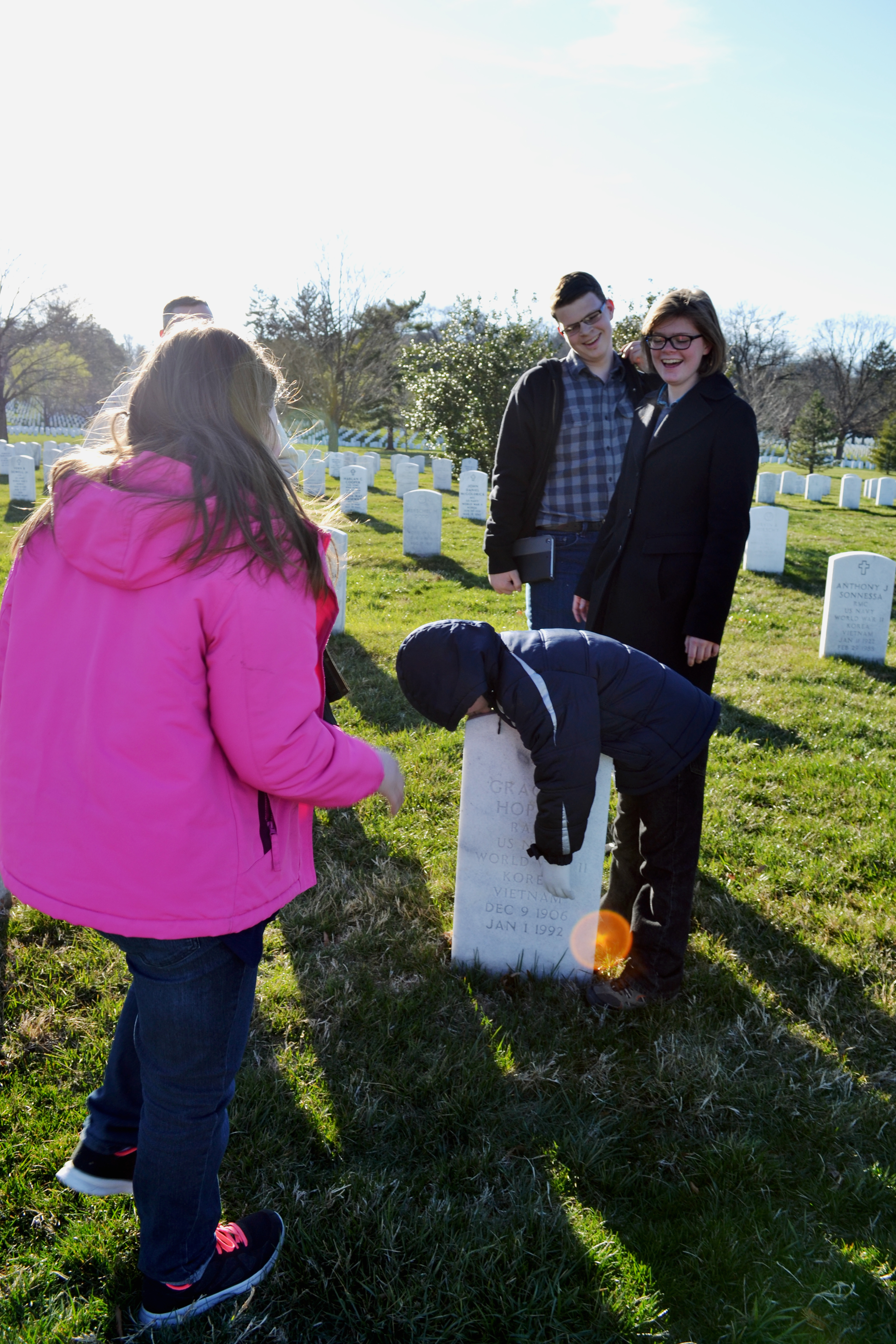
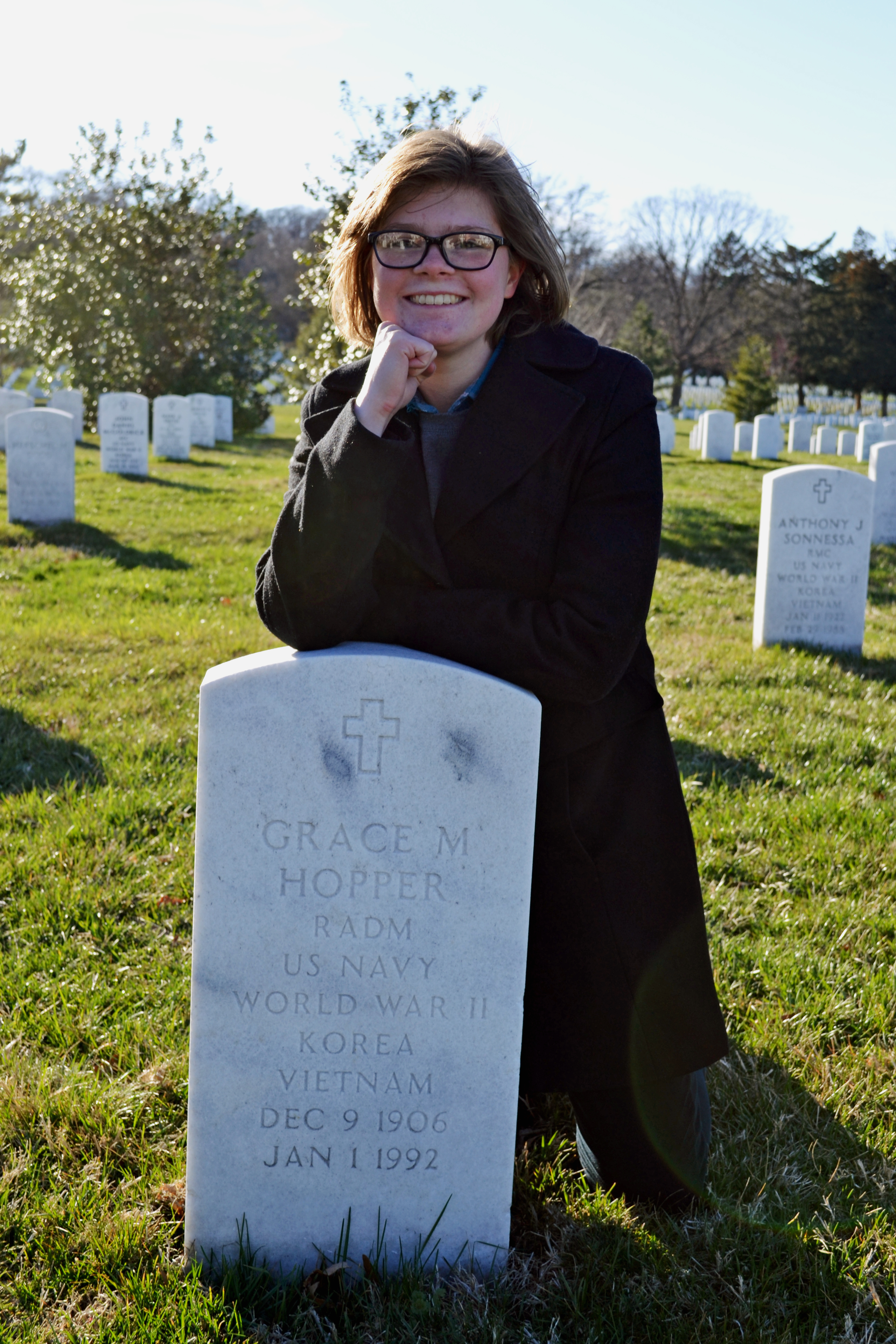
Last summer, Lauren read about a Navy Admiral named Grace Hopper. Lauren was reminded of her when she saw her name in the visitor center at Arlington. She really wanted to go find her grave, and since it was her senior trip, we thought, sure, why not? Well, it turned out to be quite an ordeal. We walked and walked and walked, getting lost more than once. All the kids were tired, but poor Matt was on the verge of exhaustion. When Lauren was able to finally locate it, we all scurried over to see it. This is what Matthew did when we got there:

We laughed and laughed which probably wasn’t the most respectful thing to do in a cemetery, but we were a great distance away from any other people, so I don’t think we offended anyone. After the stress of hunting for this gravesite, and almost giving up, Matt brought us some welcome levity. (And don’t worry, he wasn’t putting all of his weight on the tombstone to damage it.)

Lauren was delighted!

As we were leaving, I noticed that small tree growing among all those headstones. It struck me as quite beautiful to see that tree thriving despite being surrounded by so much death.

As we headed out, Matt got one more ride. He would need to toughen up because there would be a lot more walking in his future.

I missed seeing Arlington National Cemetery when I went to D.C. as a teenager. I am so glad I got to see it this time, and that my children could experience it. America is certainly not a perfect nation, far from it. But our nation has been blessed to have so many courageous people who willingly gave their lives to preserve my freedom to type these words right now. I owe a debt to these brave men and women, and I was humbled to stand on that hallowed ground

Thanks for traveling with me,

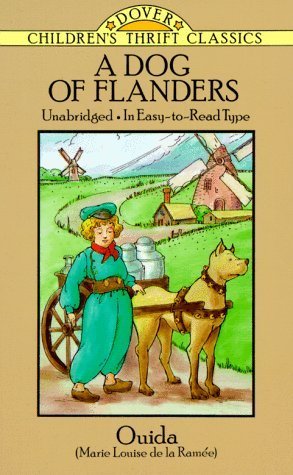
A Dog of Flanders by Marie Louise de la Ramée is a very short book that is listed in my daughter’s reading curriculum for next year. I had heard of it but never read it. It is a considered a classic, so many of you have probably read it. Since I had never read it, I thought I’d take a look.

It is a moving story of a young boy, a rescued dog, and a loving grandfather. The boy, Nello, is orphaned and taken in by his poor grandfather. Together, they rescue a dog. The dog, whom they name Patrasche, shows almost human-like appreciation for their love by serving willingly to help them earn a living. Patrasche faithfully pulls a cart loaded with milk, as this is how they eek by. Nello has a great talent for art and longs to be as great as the painter, Peter Paul Rubens. Nello grows up, falls in love and seems to be making his way as an artist when he is falsely accused of starting a fire.

It’s a moving story of loyalty, devotion, and respect. In case you haven’t read it, or would like to read it again, I will not divulge the ending. I will say, however, it was a surprise.

I am glad I took the time (a few minutes, really) to read this book. I was brought to tears and educated on Flanders. I did not know it was part of Belguim until I read this book!

I think my fifth grader will enjoy it next year, as she is an enthusiastic animal lover.

Thanks for reading about what I’m reading.

This week’s term: Antinomianism – Anti (against) nomia (law). The teaching of antinomianism is that whereas Christ is glorified by putting away our sin, the more we sin, the more glorious He becomes in His work of salvation. Therefore, we actually cause the grace of God to abound by sinning.

Last week’s term: Pelagianism – The doctrines taught by Pelagius. Pelagius was a monk born in England of great intellectual stature, but no apparent knowledge of God. He taught that man was inherently capable of doing right or wrong, that it was possible for him to live a sinless life, and that some men had actually done so. He taught that Adam’s sin had no real effect on mankind as a race, and that man was free to choose either right or wrong, not having a fallen nature.

On March 2, 2017, our family rose before dawn, loaded up the van, and left on the longest vacation we’ve ever taken. We have been blessed to visit many interesting sites over the years, but they have always been in connection with ministry or visiting relatives. We have never gone so far away for so long before.

Lauren, our senior, had said several years ago, that if given the opportunity to go on a “senior trip”, she would choose Washington, D.C. When we lived in Arkansas, this seemed like a big request. When we moved even farther west, it became an even bigger one! Our goal had been to take her last summer, but we had to tell her no due to the lack of time and funds. We encouraged her to pray and to wait on the Lord. The Lord answered us in an amazing way. No sooner had we decided not to go when some friends graciously offered us the use of their time-share in the D.C. area. This would save us a lot of money. The only requirement being that we needed to be flexible on when we could go. As a homeschooling family, this was something we could do. Terry and I saved as much money as we could, and continued to bring it to the Lord in prayer. A six-day vacancy opened up in the time-share for March 5-10, so we took that as the Lord’s leading as when we should go.

As we mapped out our plan, we realized that we would be in the area of many interesting places. Since we were already traveling over 1,200 miles just to get to D.C., why not make the most use of our time out east? So we did! We were able to arrange a trip to Gettysburg, Colonial Williamsburg, Virginia, and Lexington, Virginia, in addition to D.C. I would like to share some of the highlights of this trip with you, and perhaps encourage you to see a few of these places, also.

We drove about fourteen hours the first day of our journey, and seven then next day. We arrived in Gettysburg to a lovely hotel (it really saved us money to be going during the off-peak season, which again, was the Lord’s doing). The hotel property backed up against an old cemetery, which the history lover in me found to be quite exciting.

The next day, we headed out early to tour Gettysburg. I read The Killer Angels at the end of last year, which really gave me a better understanding of those three days in July of 1863 and made the visit even more enthralling for me.

First, we headed to the visitor’s center. The battlefield can be toured for free, but the museum charges admission. As we were walking into the museum, an elderly couple passed us as they were leaving. The gentleman stopped Terry and said, “Hey, they didn’t take our tickets for the museum inside, would you like to have them? I don’t know if they will work, but you could give it a shot.” Terry thanked him and we went inside. He showed the admissions lady the tickets and she said they were for the wrong time. We thought, oh well, it won’t work. She proceeded to change the time on them and issue us the remaining five that we needed. That gentleman saved us $30! What a blessing from the Lord.

The museum was filled with interesting exhibits. The younger ones always seem to run ahead to the interactive parts of the museum, so we had to move quickly.

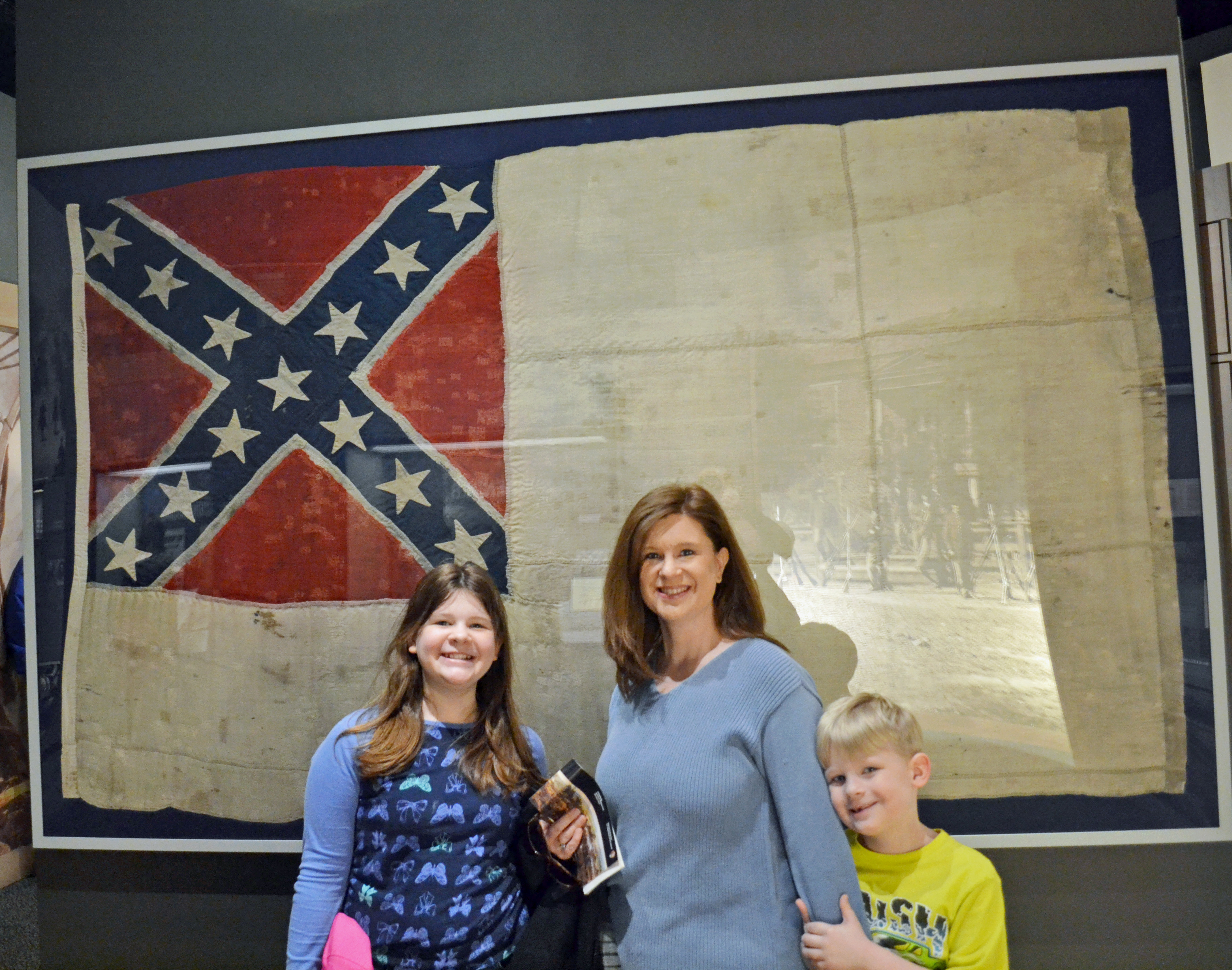
Of course, I had to get a photo with the Confederate flag.

The museum portion of our visit included watching a short film about Gettysburg, seeing the Cyclorama, a 360-degree painting of The Battle of Gettysburg with various sound and visual effects which made it seem like 3D, and the museum itself.

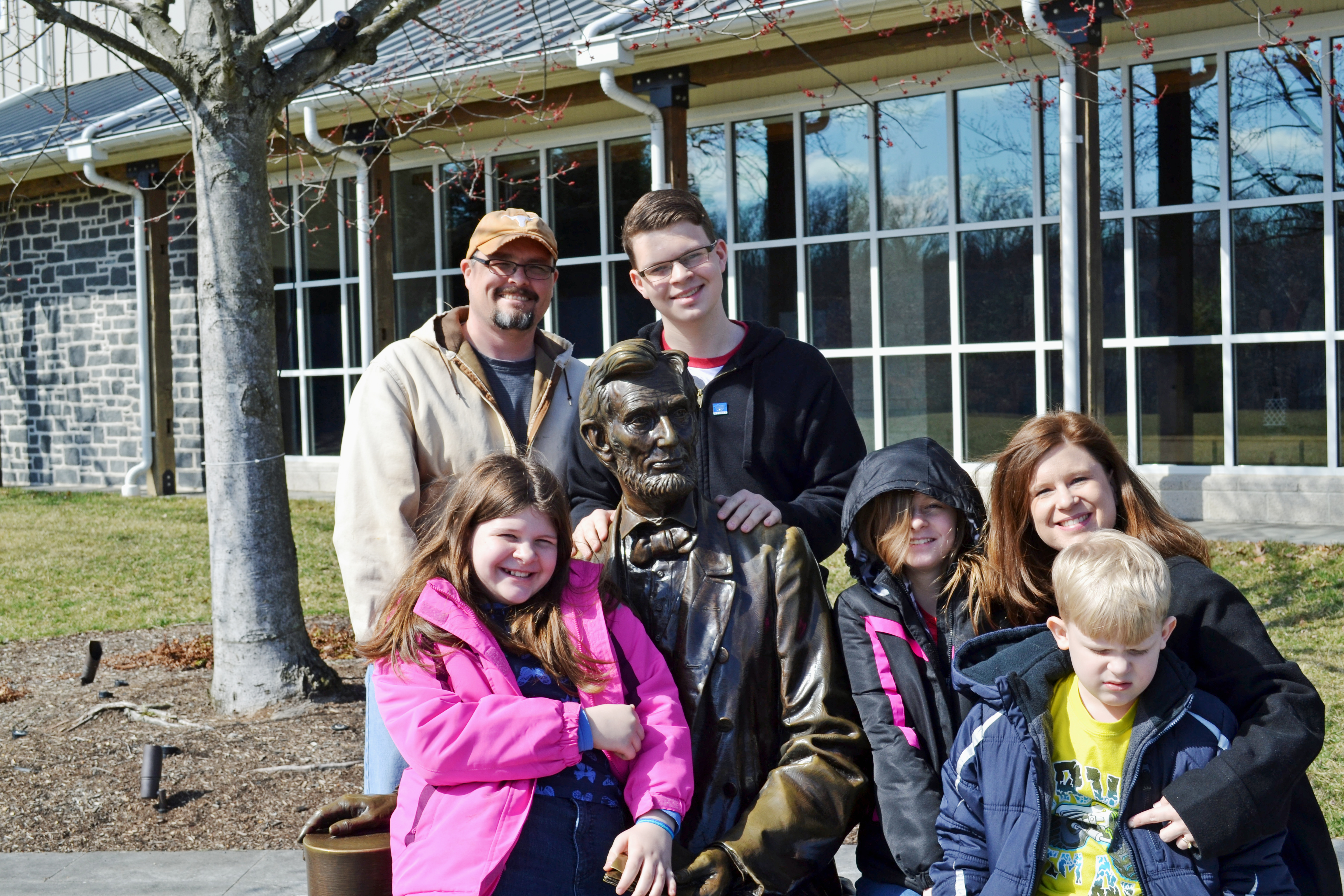
On this trip, we had to take group photos in twos. The person who snapped the first photo then handed the camera off to someone else and we took another with that person in the group. The sun was bright in this photo, but we couldn’t resist snapping a photo with Abe outside the museum.
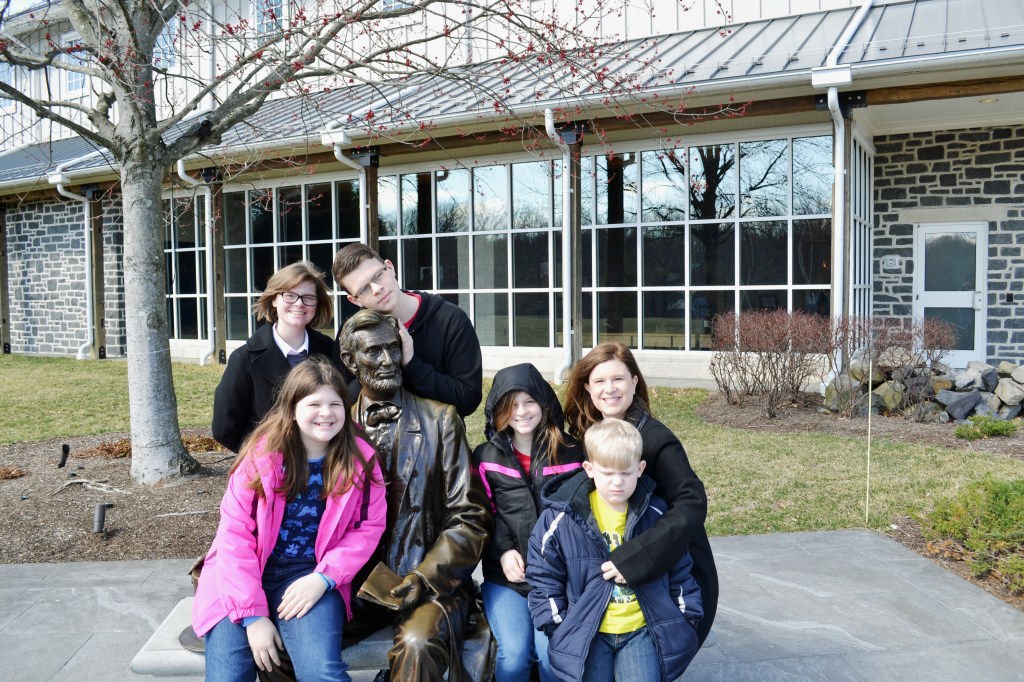
Group shot, take two.

Next, we loaded up in the van and began our own tour of the battlefield. I visited Vicksburg National Military Park last year. It was a brief trip, but we were able to see it all in about an hour. The Gettysburg battlefield is huge. It took us four hours and we still could have explored it in more detail if we’d had more time. It was bitterly cold the day we were there, with strong blasts of arctic air hitting us in the face, yet we soldiered on and had a great time.

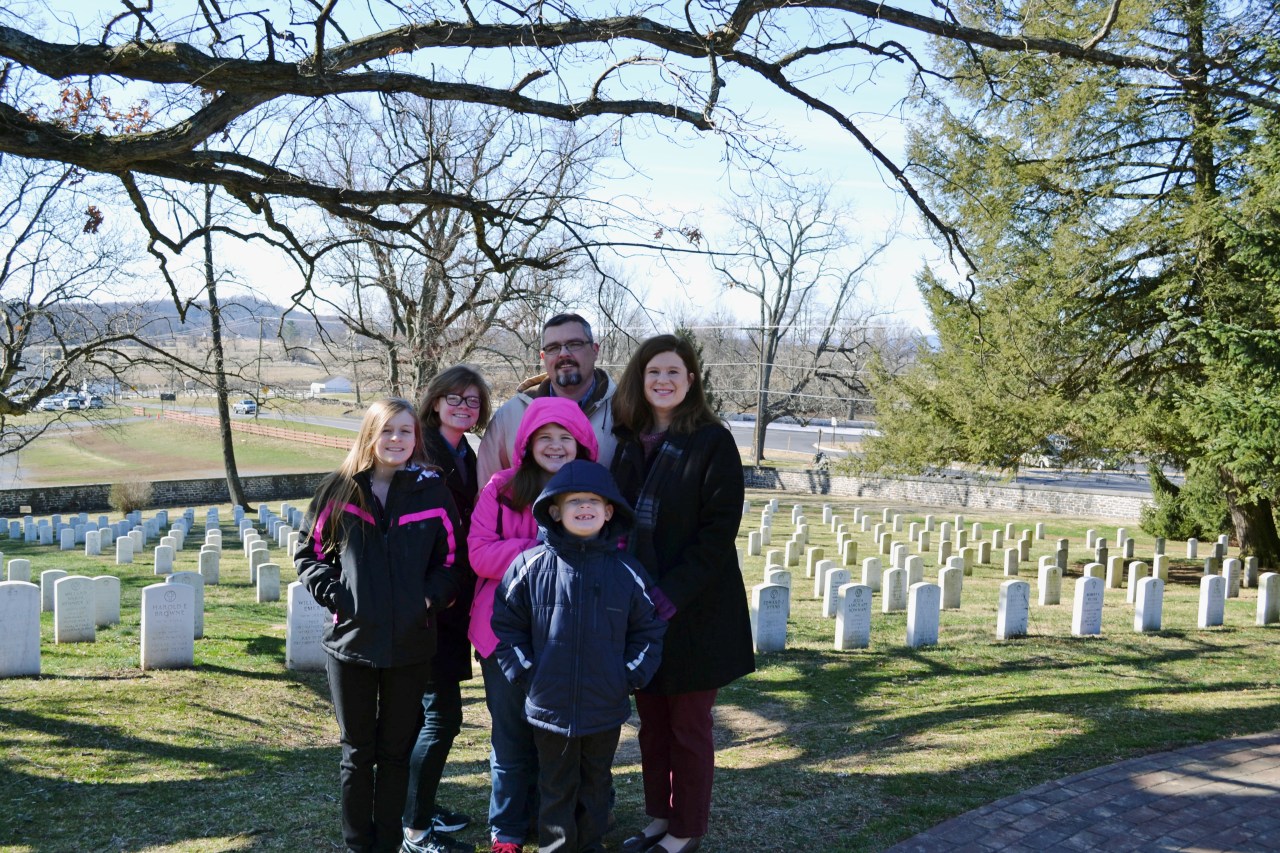
This is the view of Seminary Ridge the direction where Gen. John Reynolds (Union) was looking when he was shot off his horse. He died instantly in the opening moments of the battle.

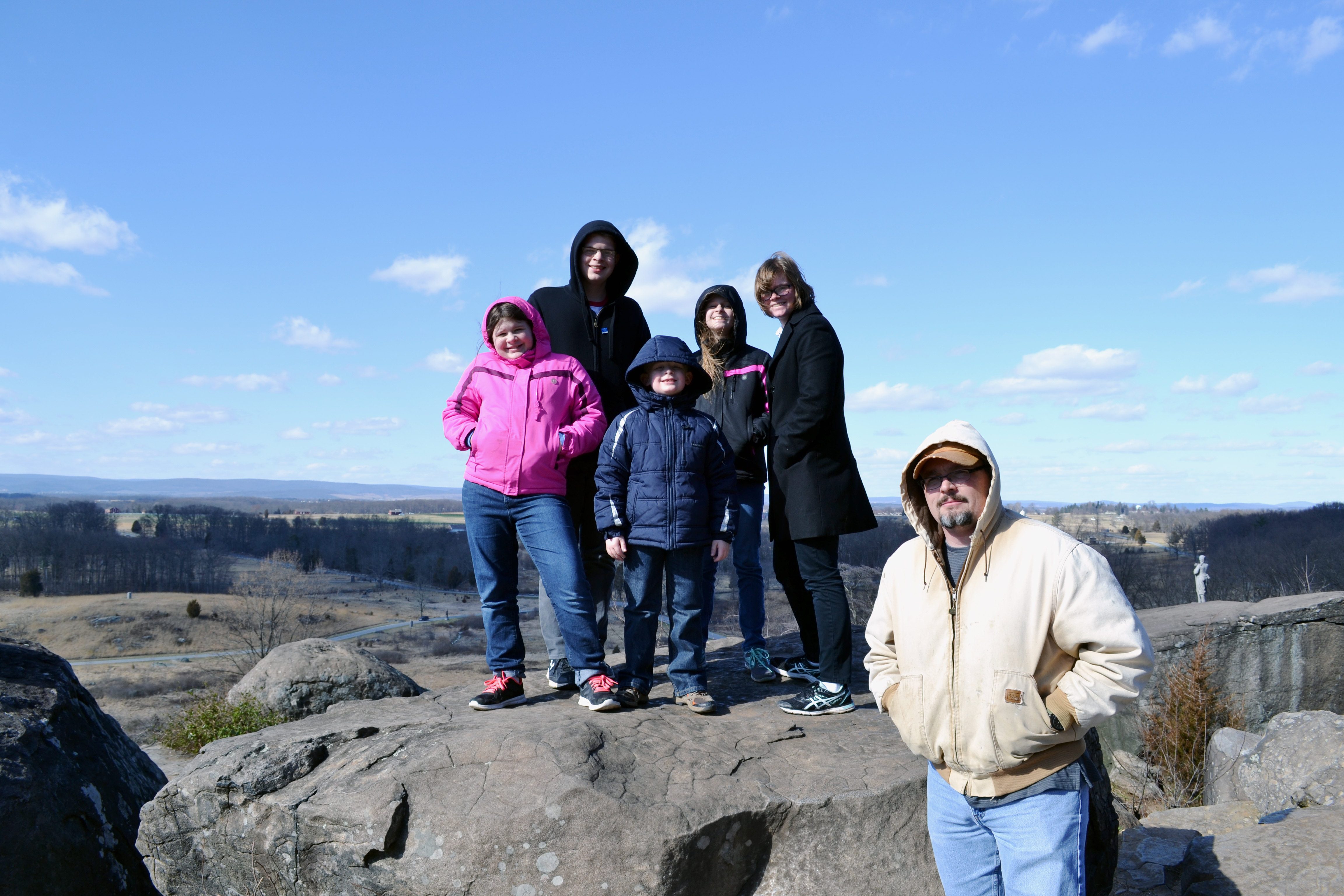
This seemed like a nice place for a photo.

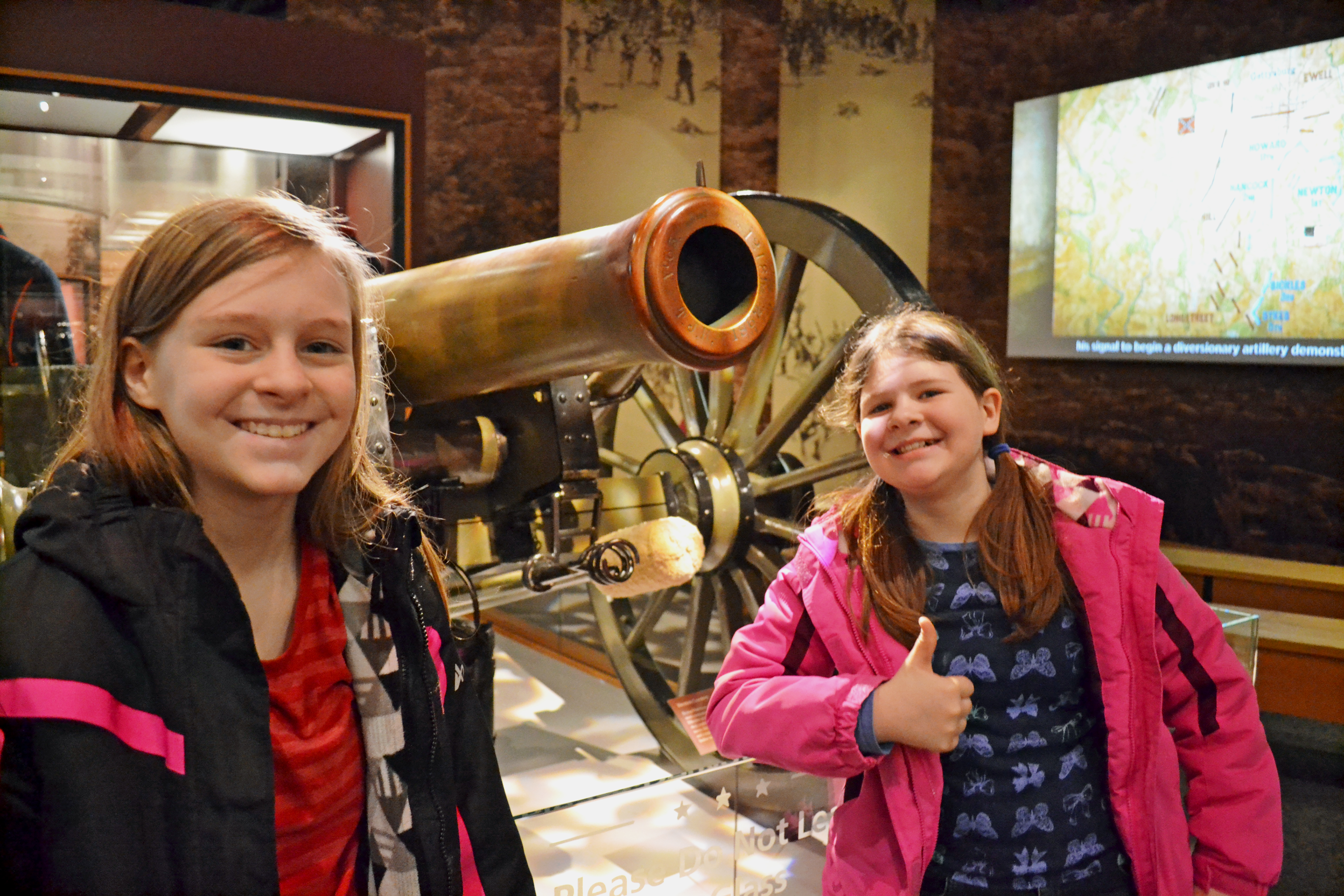
Cannons were all over the place.
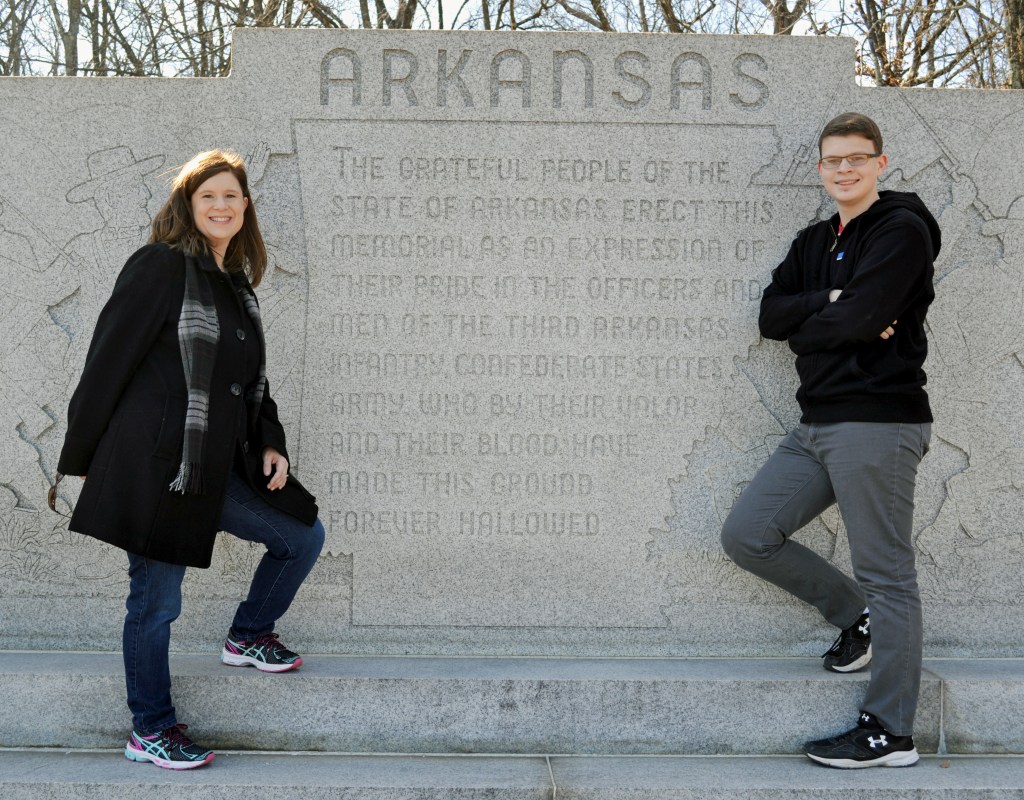
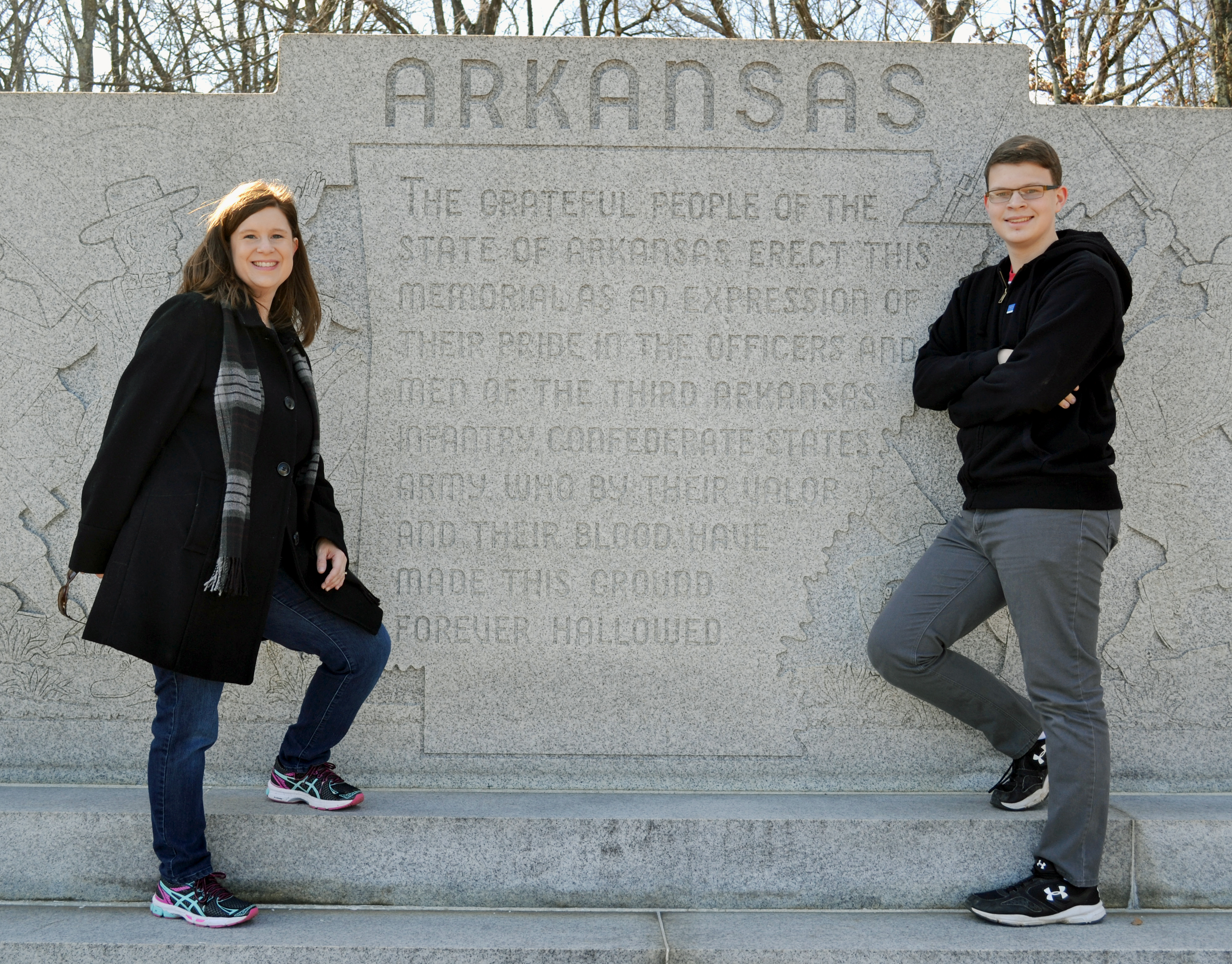
Two Arkansas natives with the Arkansas memorial.

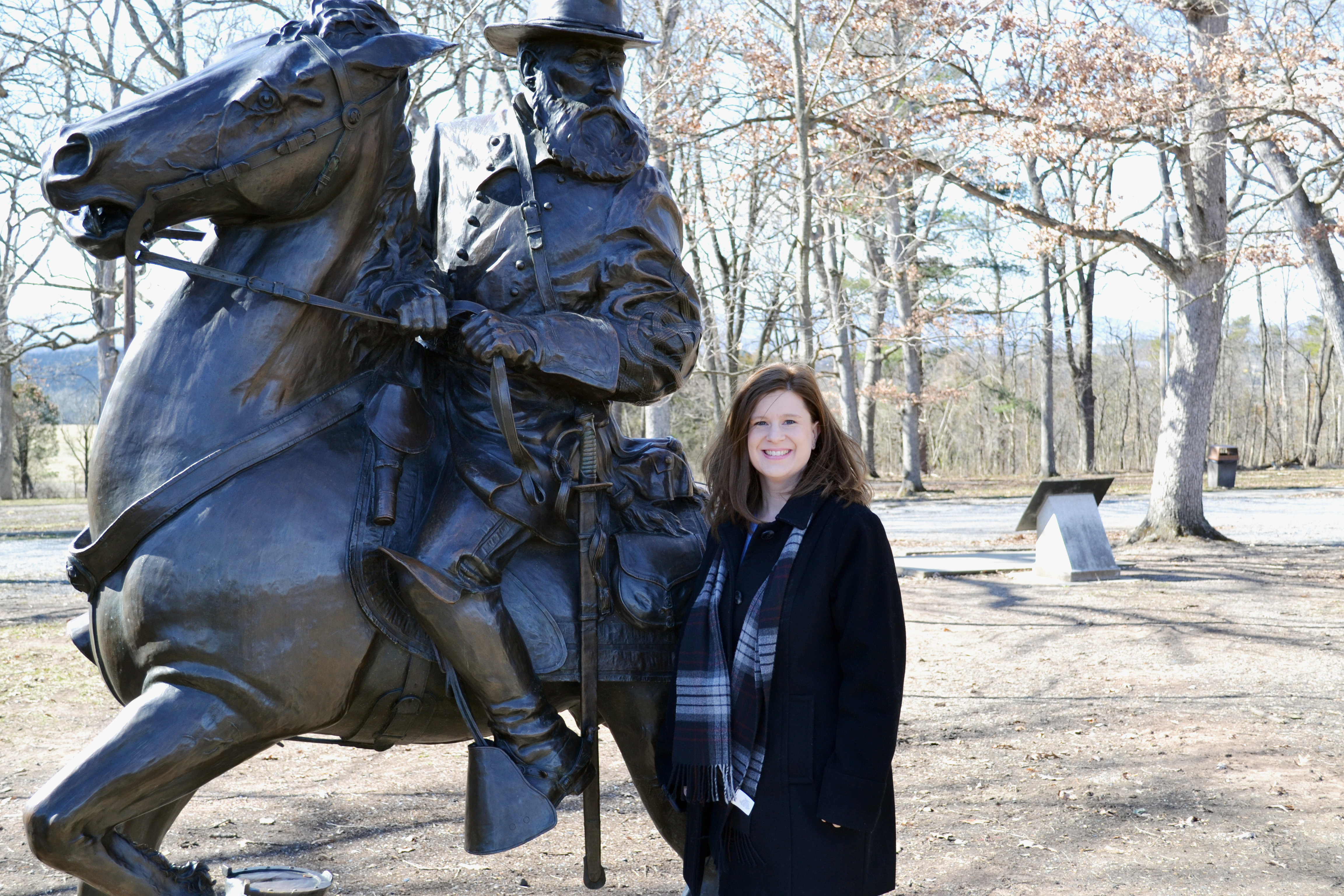
Me with Gen. Longstreet (Confederacy).

It has been debated that, had Gen. “Stonewall” Jackson not died at Chancellorsville, the south would have won the Battle of Gettysburg. Due to Jackson’s death, Longstreet became Lee’s second in command. There is much more to the story of course, so I encourage to read about the battle and about the men behind it.

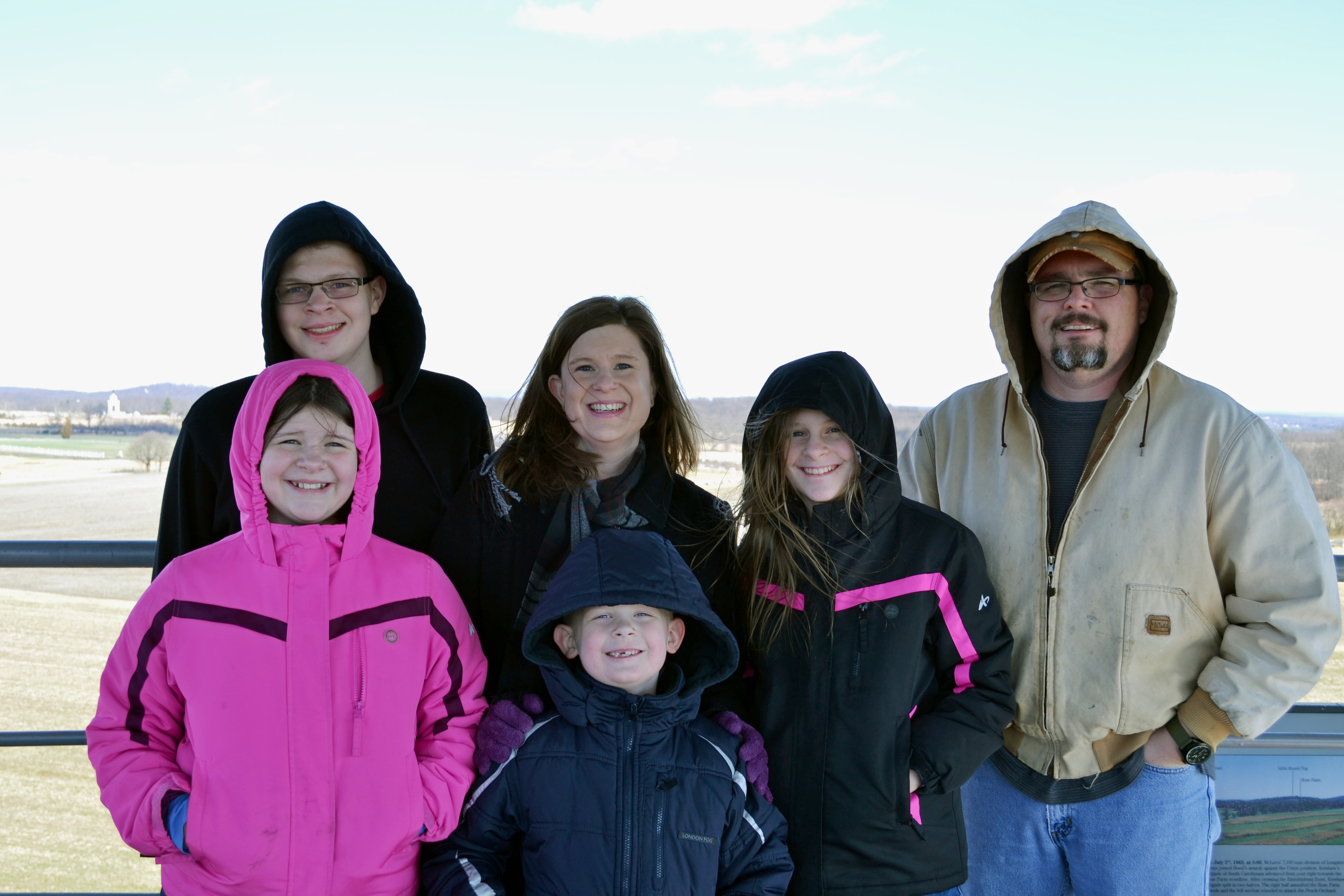
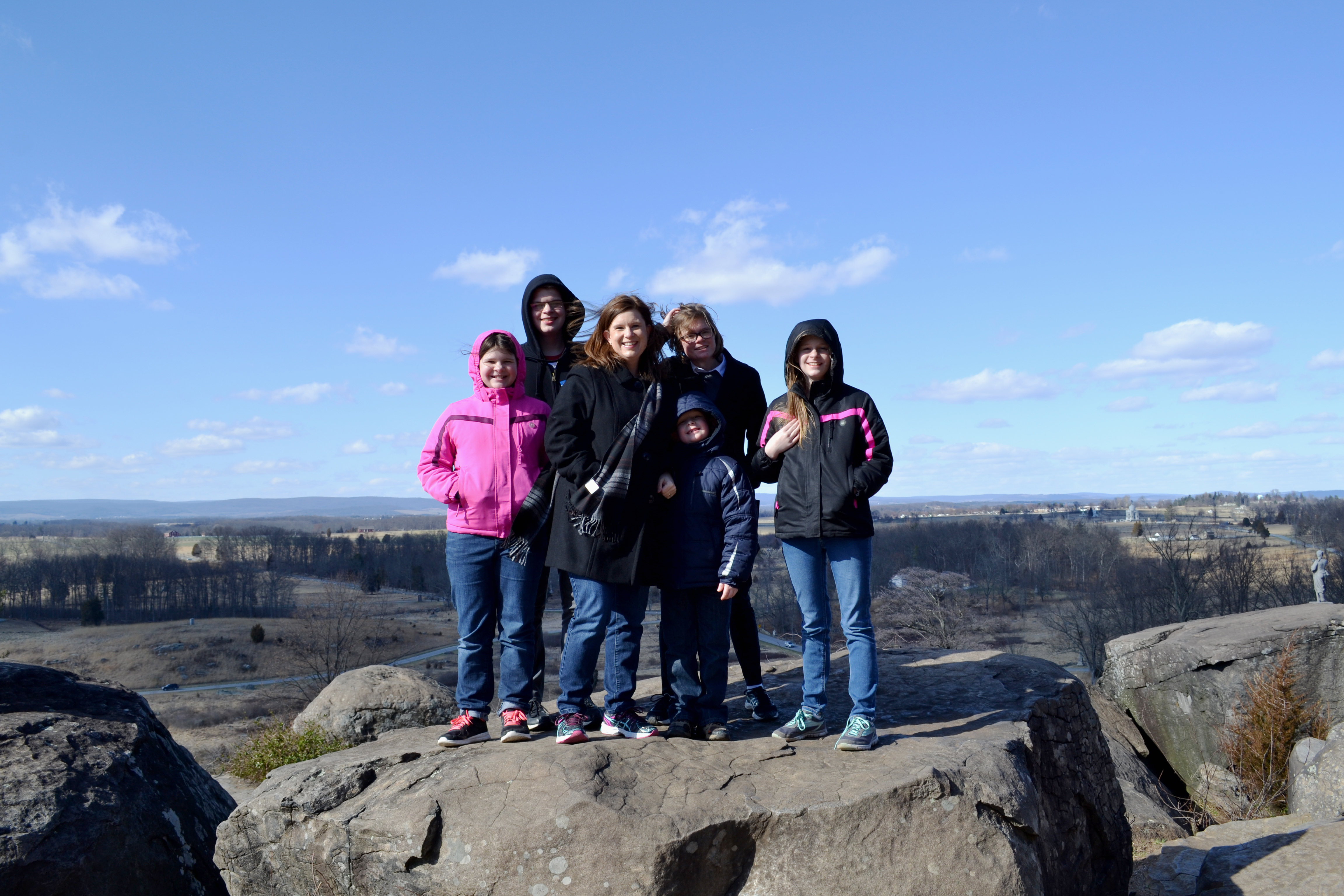
There are three observation towers at Gettysburg. We ended up climbing roughly 37 flights of stairs. I photographed the view from each of them, but they sort of run together after a while. From these vantage points, you can get the big picture of the battle, with the help of placards that explain what is before you. The wind was quite strong up there, so we didn’t get to enjoy the view long. This was the best group shot of the fifty-five we took (haha).

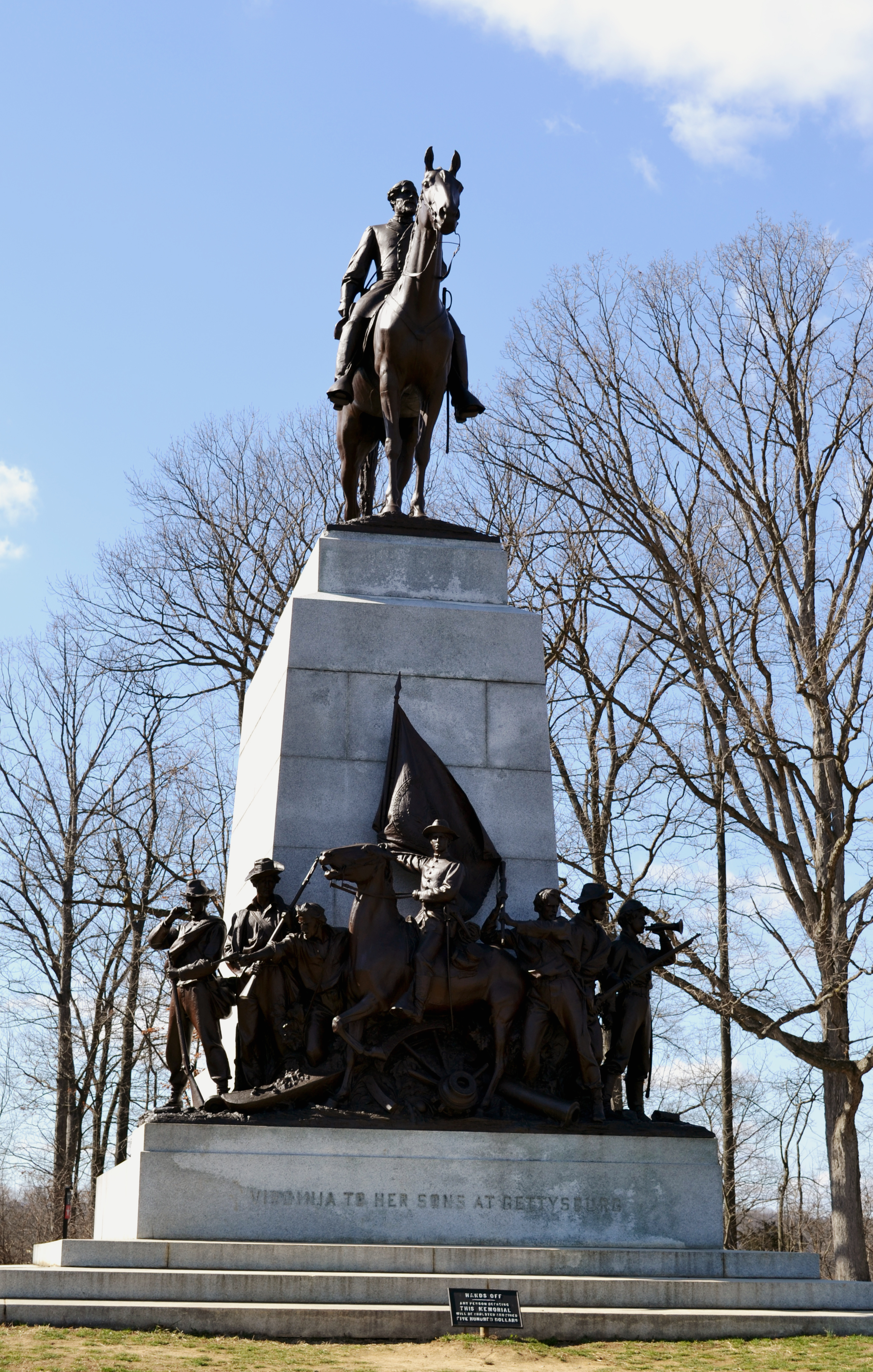
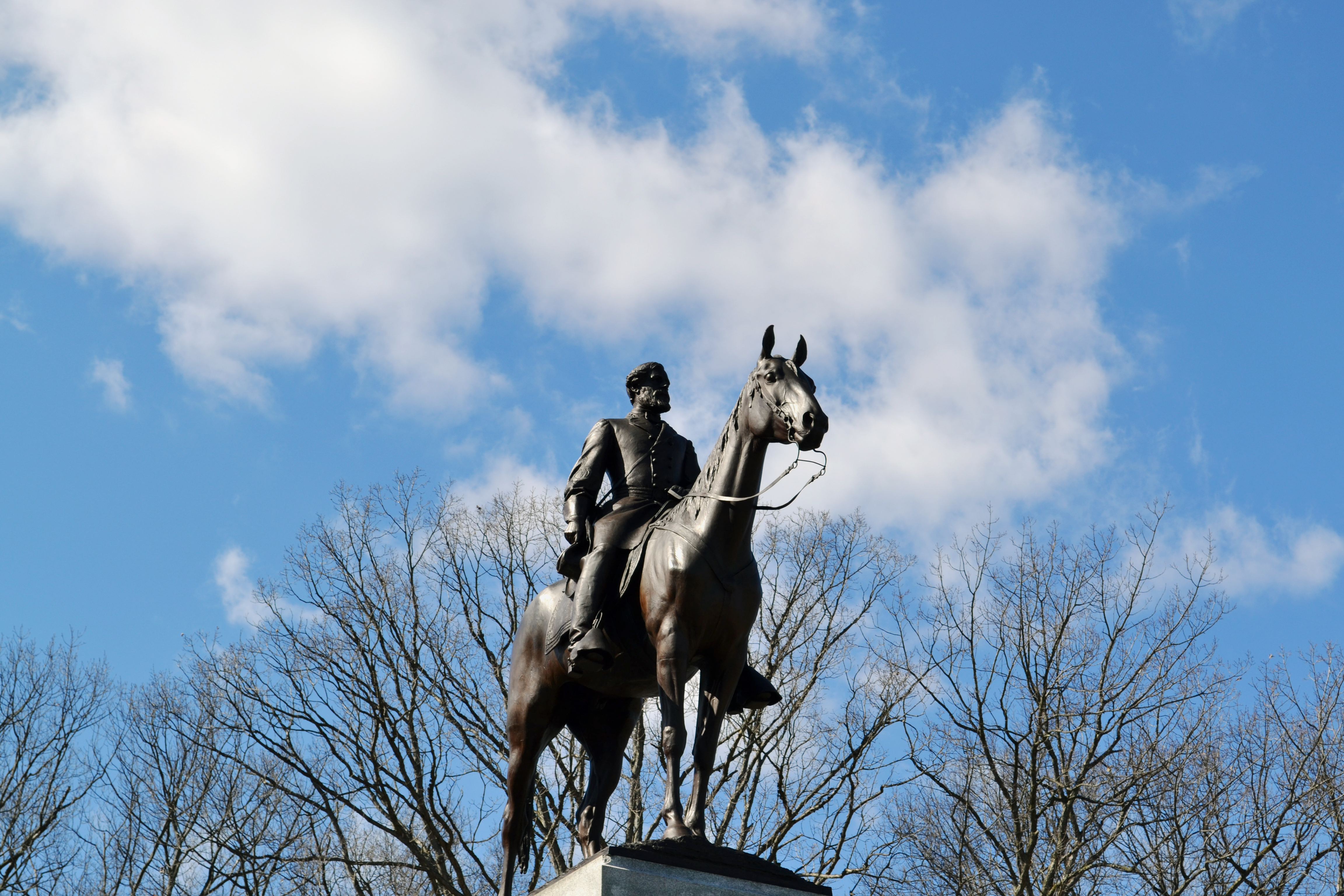
The Virgina Memorial has this amazing monument to Gen. Robert E. Lee and Traveller.

Lee and Traveller.

Me and Terry on the top of Little Round Top! I was pretty excited!
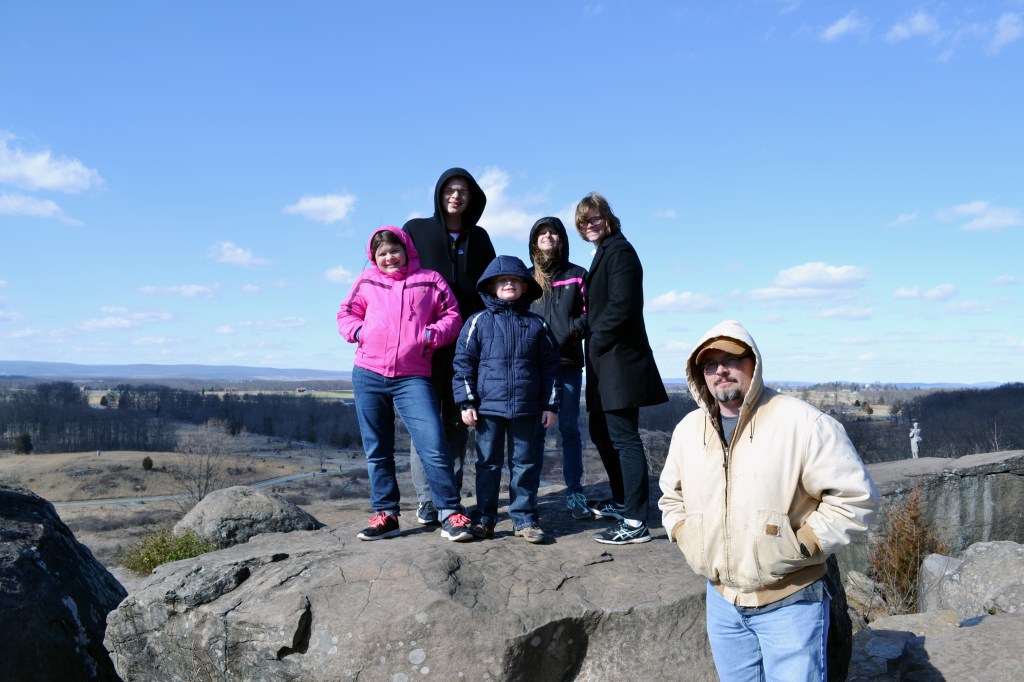
Little Round Top

More of Little Round Top. It’s the setting for much of The Killer Angels, hence my excitement at seeing it.
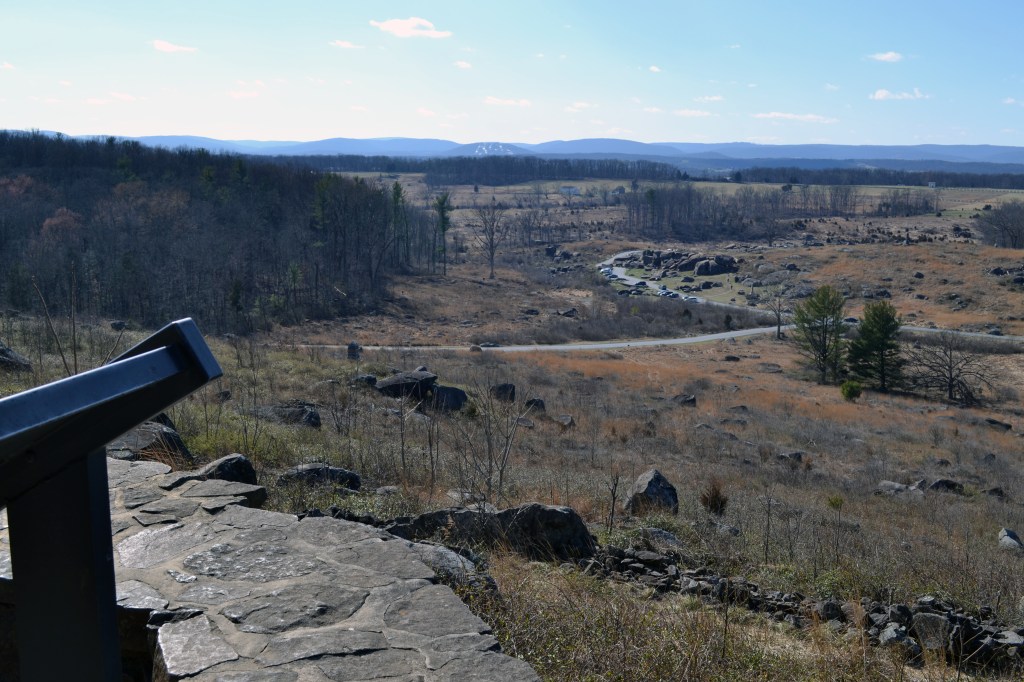
The rock formation below is Devil’s Den – Confederate snipers camped out there and shot at the Union who held Little Round Top.

The Confederate’s view of Little Round Top.
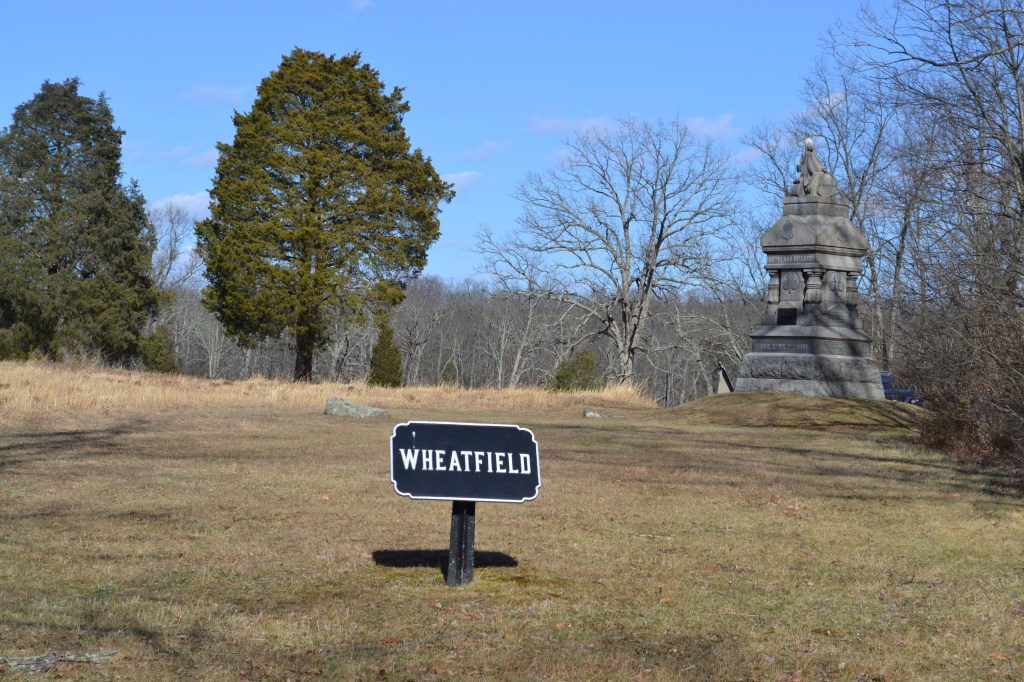
The Wheatfield was the site of brutal fighting, 6,000 men died here.

The Trostle House. This served as Major Gen. Dan Sickles headquarters during the war.

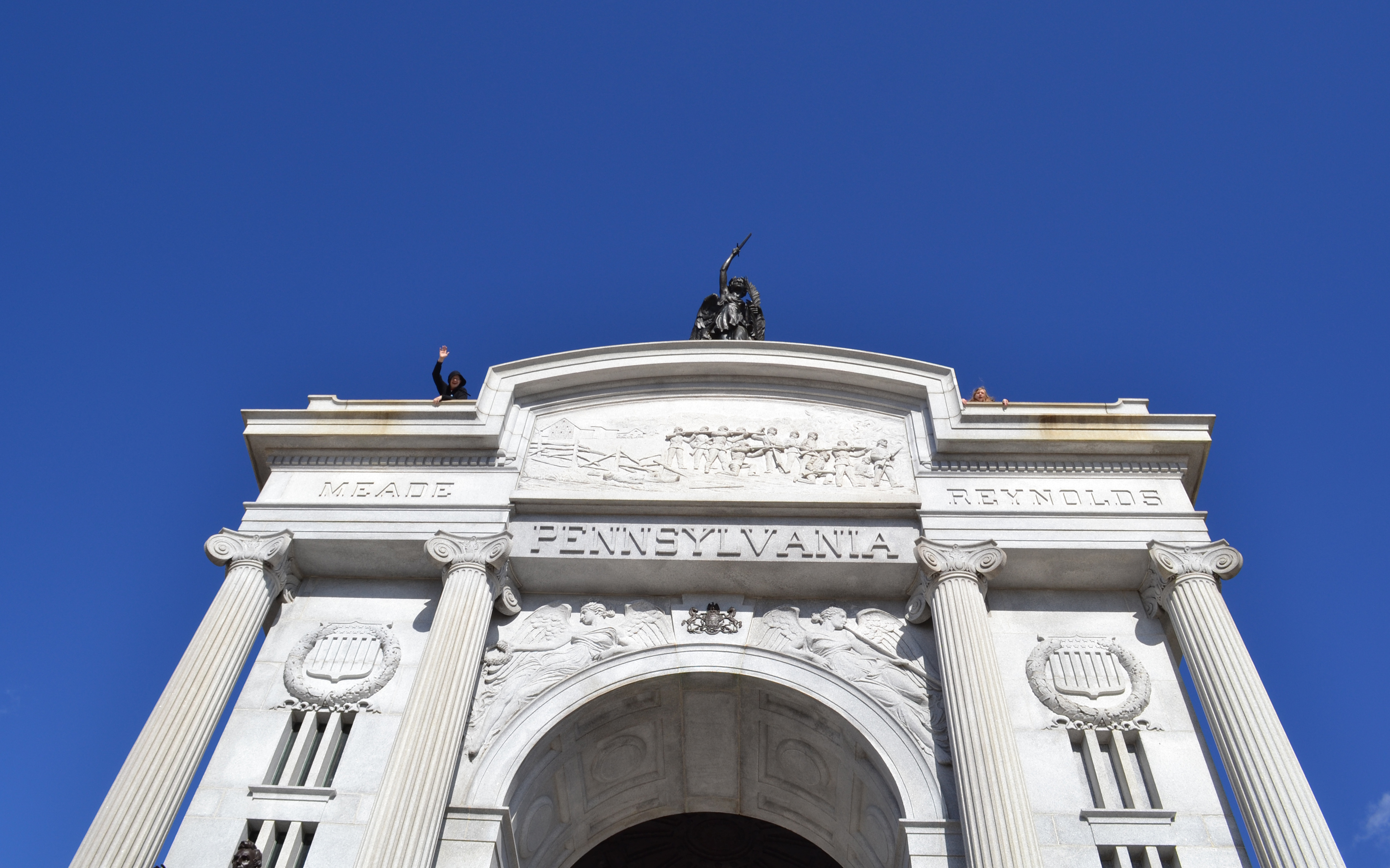
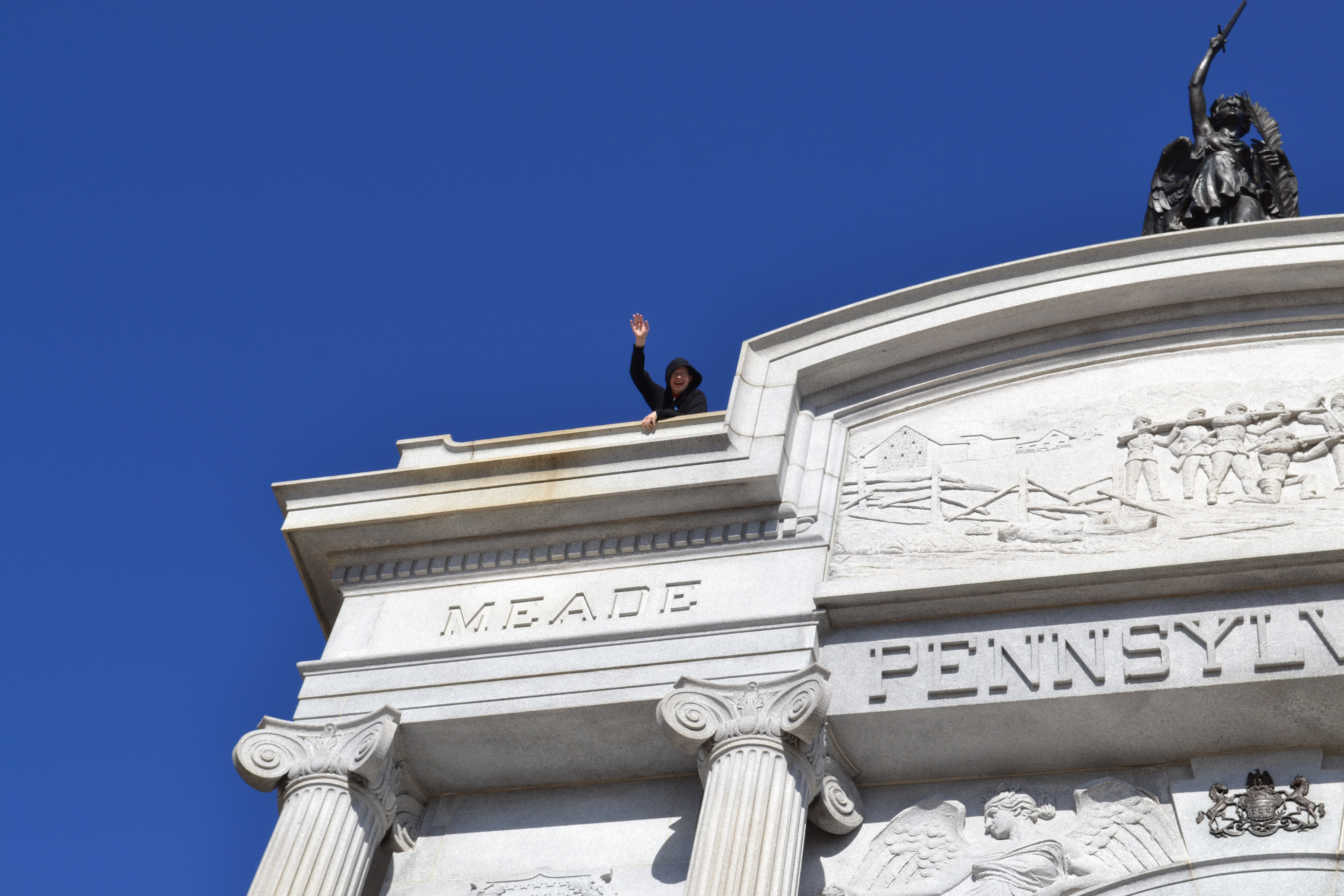
The Pennsylvania Memorial is grand and beautiful.

I didn’t realize you could climb to the top of the Pennsylvania Memorial until I heard a faint yell from above. Can you see Mitchell?
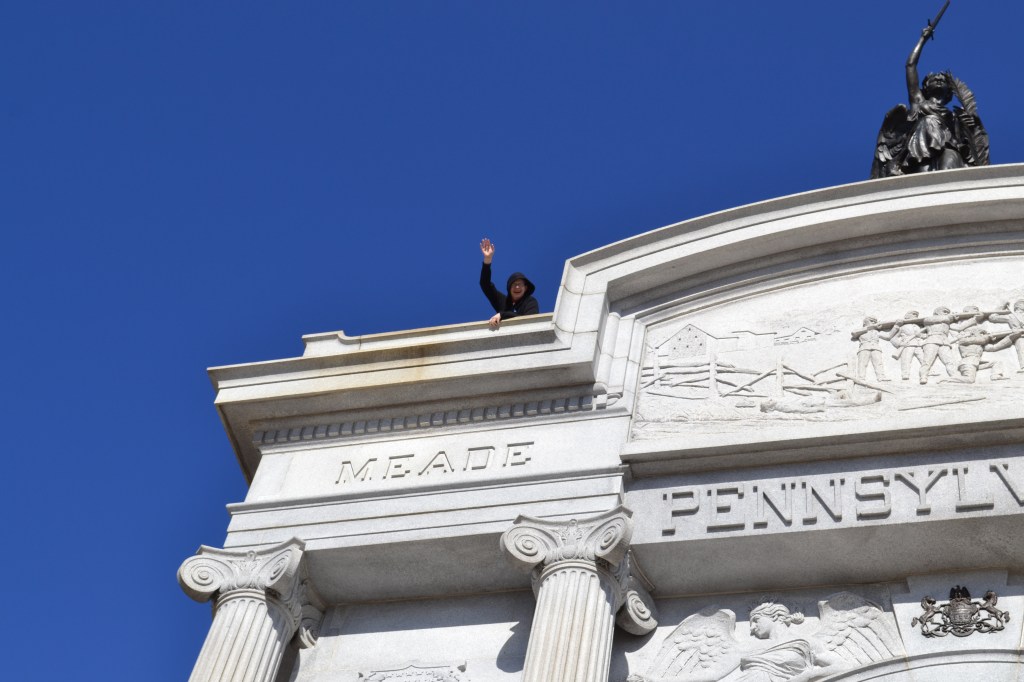
There he is!

I had to climb up, too, and get the full experience. Here is the view inside the stairwell.
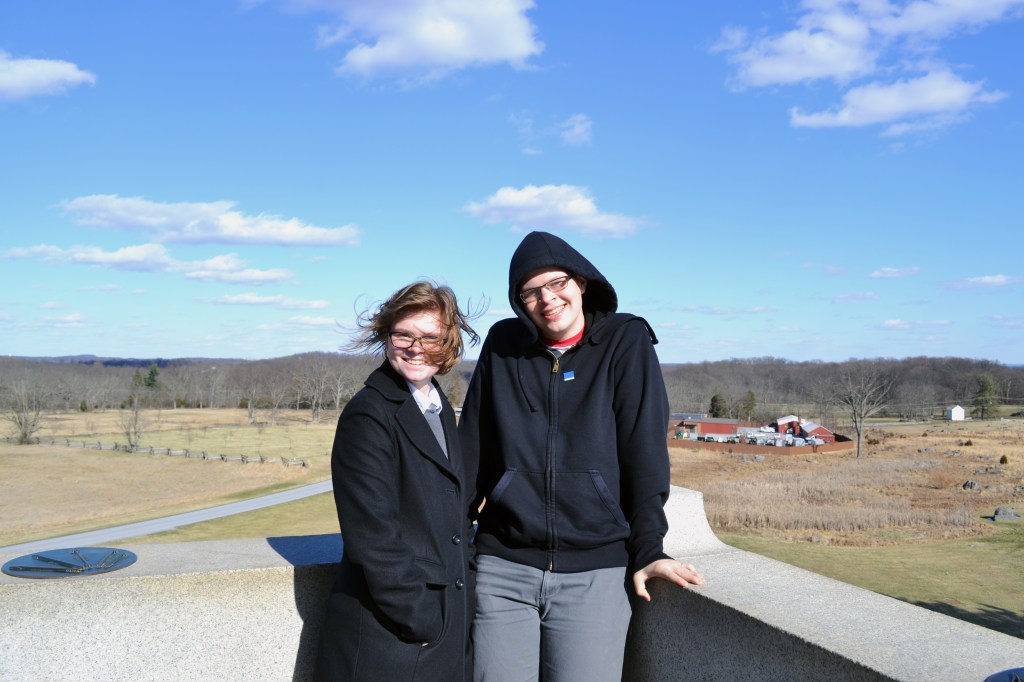
Lauren and Mitch at the top of the Pennsylvania Memorial.
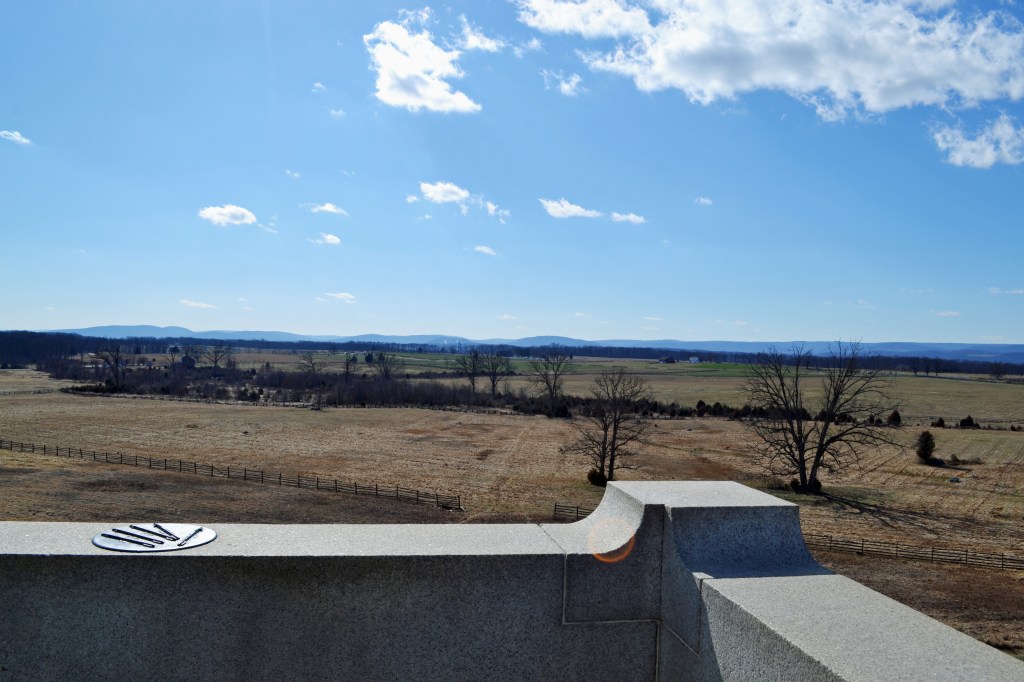
The wind was so strong at the top of this monument, that my Nikon lens was shaking. It was all I could do to hold it steady. It still did a good job, though. The round disk on the wall has landmarks listed pointing in their general direction. It was a lovely view.

In front of the library on Seminary Ridge.

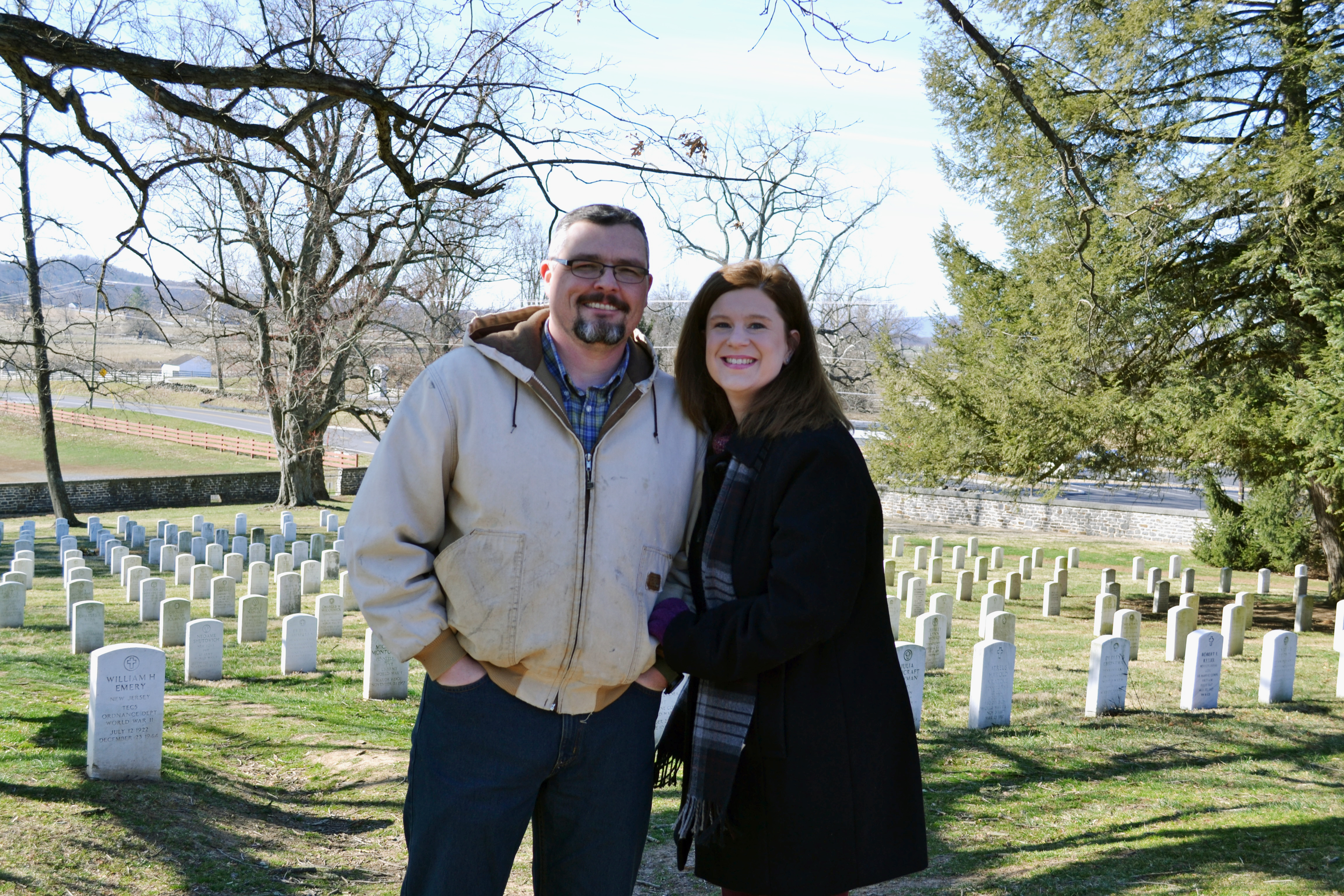
At Soldier’s National Cemetery.

Unfortunately, we didn’t tour the Soldier’s National Cemetery, where Lincoln gave the Gettysburg Address, until Sunday morning before church. The frigid air drained the battery in my Nikon, so this is the last photo I was able to get with it. The next few are from my iPhone. Even with the full day that we spent at Gettysburg, we didn’t see everything. I do hope to visit again someday. Even if I had seen it all, I don’t think I can ever really get enough.

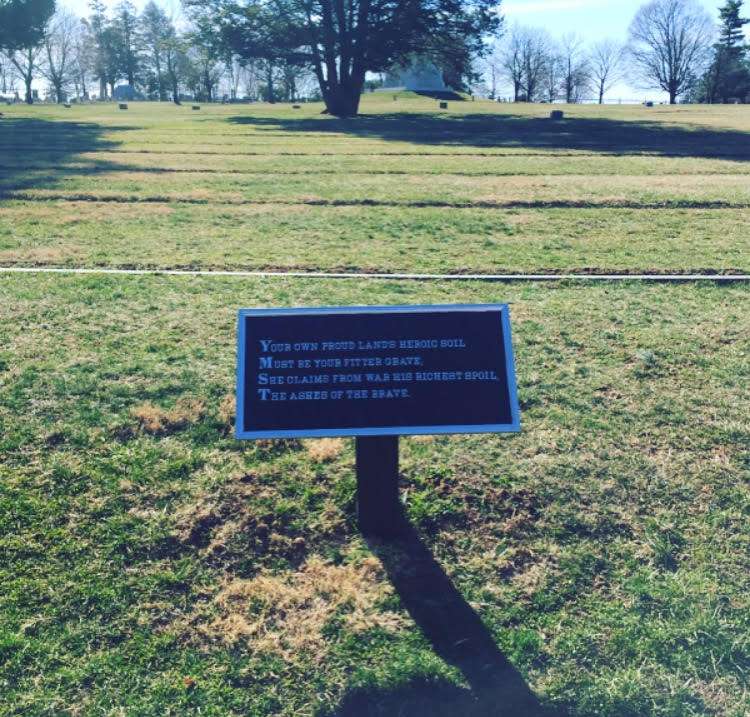
There was a poem written out in stanzas across part of the cemetery. This portion says, “Your own proud land’s heroic soil, Must be your fitter grave, She claims from war his richest spoil, The ashes of the brave.”

At the church we visited Sunday, I had an interesting conversation with a lady who grew up in Gettysburg. She informed me that the battlefield has really hampered the growth of the town of Gettysburg, after all, it takes up most of the town. As a child, she assumed every town had a battlefield in the middle of it!  Gettysburg is currently about 8,000 in population, which is how many dead they had to bury in July of 1863. She also told me that many people move there just because of the history. Before our trip, my kids liked to joke that “mom wouldn’t be coming home because she would want to live in Gettysburg”. Well, I did come home, but it’s nice to know that I’m not the only person who would want to move to a place just for its history.

We did a lot of walking and climbing at Gettysburg, and everyone got a good dose of history. And just think, this was only the beginning!

Thank you for traveling with me.

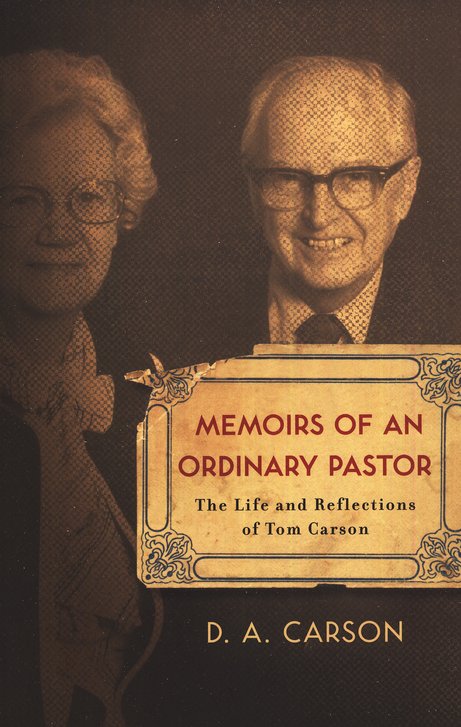
Memoirs of an Ordinary Pastor by D.A. Carson is a quick and delightful read. It will especially buoy the heart and mind of those in ministry. D.A. Carson, the author, is a former pastor, theologian, and professor who has risen to prominence in his ministry. He writes this book not about himself and his own ministry, but about his father and mother, Tom and Marge Carson, and their faithfulness to the Lord over many years. Tom Carson ministered in French-speaking Quebec. He never pastored a large church or lectured theology to an auditorium of future ministers. He was just an ordinary pastor. But as D.A. Carson shows us so beautifully in this short book, God likes to use the ordinary.

Tom Carson never wrote a book, but he did keep journals. After his father’s death, Don (D.A.) Carson decided to write about his ordinary, and amazing, father. The journals of Tom Carson are filled with his own private pleadings with the Lord to help him overcome his sins, like laziness, yet he was not lazy. He labored long and hard each every day preparing sermons, working on his French, visiting the sick and corresponding with those who not yet come to Christ and yet, he felt lazy. Perhaps this was because he never really saw the results in number that he so longed to see. Tom Carson served faithfully behind various pulpits, sometimes as the second man, others as the pastor or interim pastor, never feeling adequate enough for the job. His journal often describes how horrible his preaching is, or how poorly he preached, in his own opinion, of course.

At one point in Tom’s ministry, he became the center of a controversy. Simply put, Mr. Carson was promised funds from a fellowship to start a church, and the board- men he knew and admired – reneged. Mr. Carson firmly pointed out the problem, but ultimately, he was forced to separate from several men who had been his mentors. This was a painful time. Mr. Carson was in the right and could have slandered these men to his son, who would hear about the controversy much later in college. What a man Tom Carson was to keep his silence in order to protect his son from bitterness!(p. 59)
One journal entry that struck me was from April 7, 1973: “A pretty good day, but I’m not on the ball for my Lord. How different my diary is than that of David Brainerd.” (p. 105)

Don Carson observes of his father, “In some ways, he was replicating the stance of the apostle Paul. Most people go through life afraid that people will not think enough of them; Paul went through life afraid that people would think too much of him. (2 Cor. 12:5-6)” (p. 131)

In later years, Marge was diagnosed with Alzheimer’s and Tom lovingly and faithfully cared for her until her death. He then lived out his days quietly serving the Lord as best he could, admiring his son, Don’s, great success in ministry in England and the states.

Near the end of the book, Don Carson says this about his father: “Tom Carson never rose very far in denominational structures, but hundreds of people in the Outaouais and beyond testify how much he loved them. He never wrote a book, but he loved the Book. He was never wealthy or powerful, but he kept growing as a Christian: yesterday’s grace was never enough…He was not very good at putting people down, except on prayer lists.” (p. 147)

I enjoyed this book on two levels. First, I was blessed by it as a pastor’s wife, often identifying with that feeling of being ordinary, and perhaps a little useless. What a blessing to be reminded that obscure doesn’t mean worthless. Second, I identified with it as being the daughter of an ordinary Christian. My father was not a pastor, but he certainly was the greatest Christian man I knew. He worked tirelessly in the world, often feeling that same defeated and hopeless feeling that Tom Carson felt – and that I often feel – yet he got up and kept going. He got on his knees, even when they ached, and he got up to work, even when he was discouraged. He kept a Bible verse in his shirt pocket and worked to memorize it. He kept a smile on his face and a funny song ever-ready at his lips. He walked faithfully with the Lord, as just an ordinary guy, until he saw his Lord face to face! This book was certainly a balm for my heart and a blessing to my soul.

I implore you to read Memoirs of an Ordinary Pastor and be encouraged in the Lord.